Carpet Care Standards for B2B Facilities in London
Clean carpets are a productivity and brand standard—not a luxury. In London, Ontario offices, healthcare admin spaces, retail, and hotels, poorly maintained carpet drives complaints, odours, and early replacement costs. A2Z Building Maintenance runs standards-led carpet programs that blend low-moisture encapsulation for uptime, periodic hot-water extraction for deep recovery, and photo-verified QA so you can prove results to leadership.
Why standards matter (and how they save budget)
Carpets act like a filter. If soil loads aren’t controlled, fibres mat, colours dull, and airborne dust increases. One-off “emergency cleans” don’t work; they push soils deeper. A documented program based on traffic maps, fibre type, and manufacturer guidance prevents premature replacement and improves indoor air quality (IAQ).
The program we recommend for London facilities
- Daily/weekly soil control
- Entry matting: 3-stage mats to capture grit and moisture.
- High-efficiency vacuuming: HEPA-minded units with scheduled passes by traffic zone.
- Spot protocol: respond within 24 hours using fibre-safe agents to stop wicking and set-in stains.
- Interim low-moisture encapsulation (LME)
- Applied monthly or quarterly in high-use zones (lobbies, corridors, cafés).
- Fast dry times (often <1–2 hours) keep spaces open and reduce slip/track risks.
- Crystal polymers encapsulate soil for removal during next vacuum cycle.
- Periodic hot-water extraction (HWE)
- Semiannual or annual in most B2B spaces, more often where soils are heavy.
- Targets embedded residues and odours that LME can’t fully remove.
- Controlled moisture and proper pH neutralization to avoid wicking.
- QA & reporting
- Photo logs before/after by zone, stain map updates, and trend notes.
- Quarterly reviews with recommendations on cadence, chemistry, and traffic control.
We align to carpet manufacturer care guides and your warranty terms whenever provided.
Stain and odour response framework
- Identify & isolate: coffee, grease, rust, toner, or bio—different chemistry, different dwell.
- Blot, don’t rub: protect pile tips and patterns.
- Right chemistry: oxidizers vs. reducers, enzyme steps for food or bio residues.
- Rinse & neutralize: reset pH to protect dyes and adhesives; speed dry with air movers.
- Document: update the stain map; add to the QA photo log for root-cause analysis.
Health, safety, and IAQ
- WHMIS/SDS on site with labelled dilutions.
- Low-VOC agents and controlled dwell to reduce odour events.
- HEPA-minded vacuums to prevent re-aerosolization.
- Slip prevention: cordon wet zones; reopen only after verified dryness.
Choosing cadence by space type
- Boardrooms & lobbies: monthly LME; HWE every 6–9 months.
- Open offices & corridors: quarterly LME; HWE every 9–12 months.
- Retail & hospitality: monthly LME; HWE every 3–6 months due to heavier soils.
- Healthcare admin/education: low-odour, residue-free chemistries; cadence per policy.
Related services that protect carpet life
- Keep hard-surface approaches clean with pressure washing to reduce tracked-in soils.
- Brighten wet areas and stop odour migration with tile & grout cleaning.
- Improve first impressions with streak-free window cleaning.
- See the full service overview: Carpet Cleaning Services.
London-first, Ontario-wide coverage
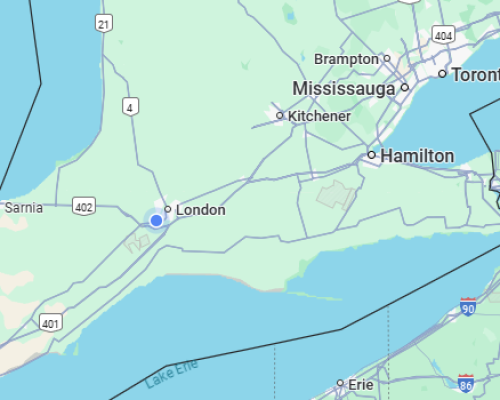
We deliver carpet programs across the region, including
London •
Ottawa •
Kitchener •
Waterloo •
Cambridge •
Woodstock •
Windsor •
St. Thomas •
Strathroy •
Stratford •
Port Stanley •
Toronto •
Ingersoll.
Clear next step
Start with a pilot corridor in your highest-traffic zone. We’ll run LME now, schedule HWE for after-hours, and share QA photos, stain maps, and a savings forecast on fibre life.
- Explore the service: Carpet Cleaning Services
- Compare solutions: Janitorial Services
- Get started now: Request a Quote
How often should we clean high-traffic carpets?
Most facilities run monthly or quarterly low-moisture encapsulation and schedule hot-water extraction every 6–12 months, adjusted by soil loads and usage.
Does low-moisture cleaning replace extraction?
No. Encapsulation keeps surfaces presentable and controls odours quickly. Periodic hot-water extraction is still required to remove embedded residues.
How do you prevent wicking and recurring spots?
We extract with controlled moisture, neutralize pH, accelerate drying with air movement, and log stain history to adjust chemistry for stubborn areas.
Are your products safe for staff and visitors?
Yes. We use WHMIS-compliant, low-VOC agents and maintain SDS on site. We cordon wet zones, verify dryness, and reopen areas only when it’s safe to do so.
Can you service multi-site portfolios in Ontario?
Absolutely. We standardize SOPs, QA photo logs, and reporting across cities, with one point of contact for scheduling, stain tracking, and performance reviews.