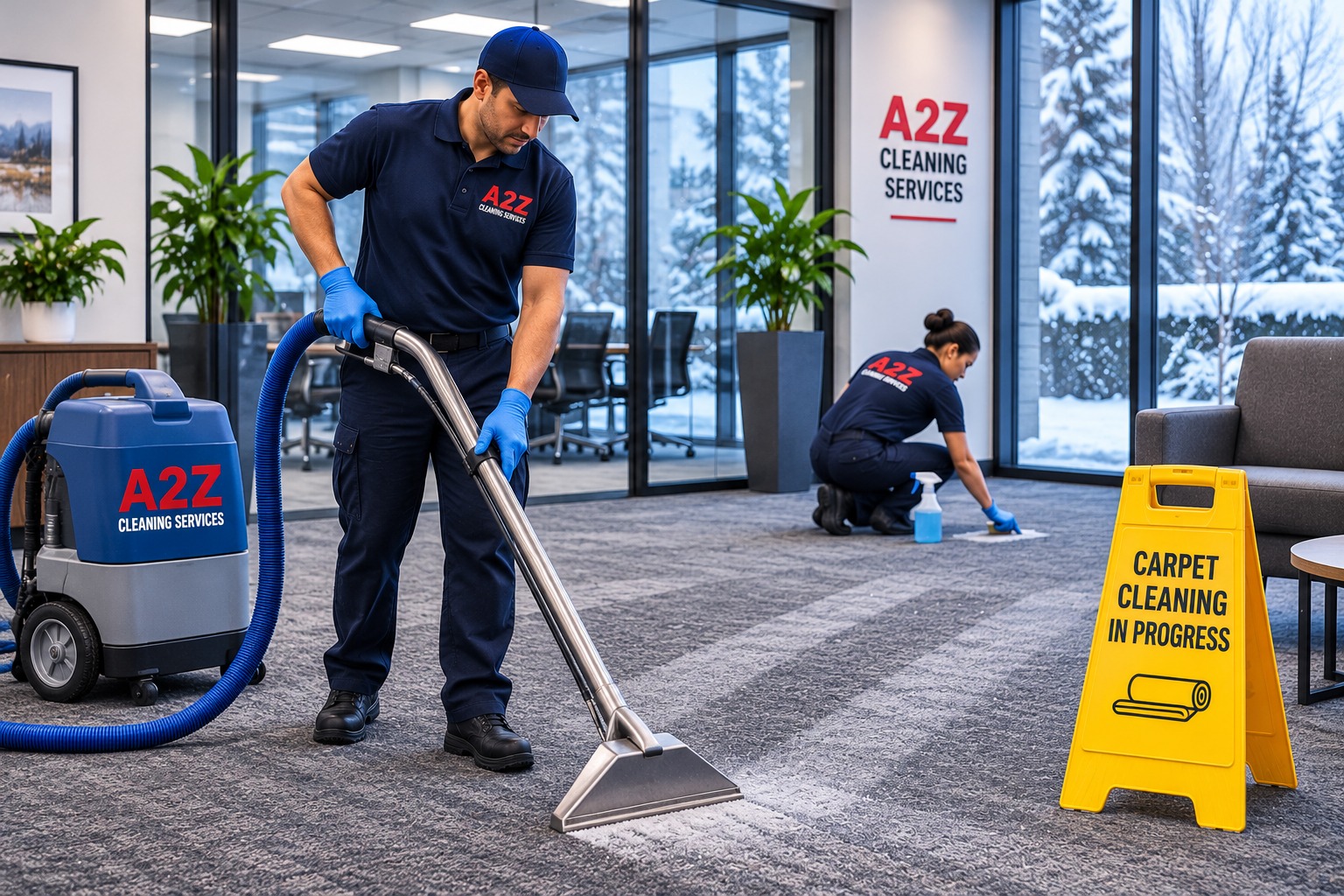
Your commercial carpet may look acceptable at the beginning of the workday, but winter can change that quickly. Wet boots, road salt, grit, coffee spills, and heavy foot traffic can leave entrances, hallways, and office carpets looking stained and tired long before spring arrives.
For office managers, property managers, business owners, clinic administrators, hotel operators, and facility teams, dirty carpets create more than an appearance problem. They can affect first impressions, employee comfort, odour control, maintenance costs, and the overall condition of your workplace.
Regular vacuuming is essential, but it does not always remove embedded soil, salt residue, or accumulated stains. Without a suitable maintenance plan, carpets can become more difficult to clean as winter progresses.
This guide explains how commercial carpet cleaning in London, Ontario can help facilities prepare for winter, maintain heavily used spaces, and make better decisions about cleaning frequency and professional services.
For facilities that need deeper carpet maintenance, professional commercial carpet cleaning services can help address embedded dirt, stains, and high-traffic wear beyond routine vacuuming.
Why Commercial Carpet Cleaning Matters During Ontario Winters
Winter introduces cleaning challenges that are difficult to avoid in Ontario commercial buildings.
Employees, customers, patients, tenants, and visitors carry moisture, grit, dirt, and road salt indoors. Once these materials reach carpeted areas, they can settle into fibres and gradually affect the carpet’s appearance and condition.
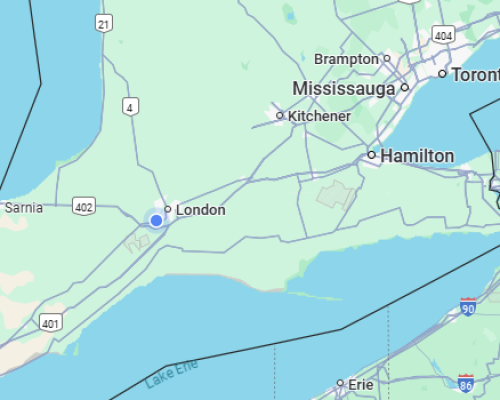
In London, Ontario, commercial buildings experience changing winter conditions that include freezing rain, snowfall, salted sidewalks, melting slush, and wet entrance mats.
These conditions can affect offices in downtown London, medical and professional buildings along major commercial corridors, retail properties near Masonville and White Oaks, and workplaces in surrounding business parks.
Similar challenges affect businesses in St. Thomas, Woodstock, Strathroy, Ingersoll, Stratford, Kitchener, Waterloo, Cambridge, and Windsor.
Common winter carpet problems include:
- White or discoloured areas caused by tracked-in road salt.
- Dark traffic lanes near entrances and corridors.
- Moisture and dirty footprints spreading beyond entrance mats.
- Food and beverage stains in staff rooms or meeting areas.
- Persistent odours associated with spills or moisture.
- Flattened carpet pile in heavily used areas.
- Dust and grit collecting beneath the visible surface.
These problems rarely improve through vacuuming alone once residue becomes embedded. The correct cleaning approach depends on carpet construction, soil type, condition, and manufacturer recommendations.
The objective is not simply to make carpeting look better for a few days. It is to establish a maintenance routine that supports appearance, practical cleanliness, and responsible flooring care throughout the season.
What Are the Signs Your Commercial Carpet Needs Deep Cleaning?
Facility managers should not wait until a carpet looks severely dirty before reviewing its condition. Small warning signs can indicate that routine maintenance is no longer keeping up with daily use.
Visible traffic lanes
Areas around entrances, reception desks, elevators, meeting rooms, and busy corridors often develop darker walking paths.
These areas may accumulate embedded soil or experience fibre wear. Professional cleaning can remove suitable soil buildup, although permanent wear or damage may not be reversible.
Salt residue and winter staining
Road salt can leave visible deposits after moisture evaporates. These marks may become more noticeable during periods of heavy winter traffic.
Removing residue early with carpet-appropriate products can help prevent it from remaining embedded.
Odours that return after vacuuming
Persistent odours may result from spills, moisture, food residue, or other contamination. In some cases, the problem can extend beneath the carpet surface.
A professional assessment can help identify whether cleaning is appropriate or whether further investigation is required.
Stains that keep reappearing
Some stains appear to disappear during cleaning but return as the carpet dries. This may happen when residue remains in the backing or deeper layers and moves toward the surface during drying.
Repeated reappearance is a reason to review the cleaning technique instead of continuing to apply more detergent.
Carpets that look dull despite regular vacuuming
Vacuuming removes loose soil, but embedded particles can remain within the pile. A carpet that looks consistently grey or tired may need a deeper cleaning method suitable for its construction.
Commercial Carpet Cleaning Checklist for Winter
A practical checklist helps businesses identify the areas most likely to experience winter-related carpet problems and prioritize cleaning services accordingly.
| Facility Area | Common Winter Problem | Recommended Maintenance |
|---|---|---|
| Main entrances | Salt, slush, moisture, grit, and heavy foot traffic. | Inspect mats, vacuum frequently, address salt deposits promptly, and schedule deep cleaning when needed. |
| Reception areas | Visible traffic lanes, footprints, dust, and stains. | Routine vacuuming, prompt spot cleaning, and periodic professional carpet care. |
| Office corridors | Embedded soil, flattened pile, and repeated walking traffic. | Thorough vacuuming and cleaning based on traffic and carpet condition. |
| Meeting rooms | Coffee spills, food stains, chair marks, and dust. | Spot treatment and scheduled deep cleaning outside meeting hours. |
| Staff lunchrooms | Food residue, spills, odours, and beverage stains. | Prompt spill response and carpet-appropriate stain treatment. |
| Waiting areas | High visitor traffic, tracked-in soil, and upholstery-adjacent stains. | Frequent inspection and cleaning around seating and walking paths. |
| Carpeted stairways | Concentrated traffic, abrasive grit, and soil along stair edges. | Careful vacuuming, edge detailing, and periodic professional cleaning. |
The checklist should be adjusted to suit your particular building. A small professional office with limited visitors has different cleaning requirements from a medical reception area, hotel corridor, coworking space, or multi-tenant commercial property.
Cleaning frequency should respond to actual traffic and visible conditions rather than a rigid schedule that ignores seasonal changes.
How Often Should Commercial Carpets Be Professionally Cleaned?
There is no single professional carpet cleaning schedule that applies to every commercial facility.
The correct frequency depends on carpet material, manufacturer guidance, number of occupants, visitor traffic, use of entrance mats, soil exposure, and the effectiveness of regular vacuuming.
For example, a quiet office may maintain its carpet condition with regular vacuuming and periodic professional cleaning. A busy reception area with constant visitor traffic may require more frequent attention to high-use zones.
Rather than treating every area the same way, consider a zone-based approach.
High-traffic zones
Entrance-adjacent carpeting, main corridors, reception areas, elevator access points, and frequently used waiting rooms should be inspected regularly.
These areas usually show soil accumulation sooner than private offices or low-use rooms.
Moderate-traffic zones
Meeting rooms, shared offices, staff spaces, and secondary corridors may need periodic cleaning based on use and visible condition.
Low-traffic zones
Private offices, limited-access meeting spaces, and infrequently used rooms may require less frequent deep cleaning if routine maintenance is effective.
Professional cleaning should be arranged when inspection shows that normal vacuuming and spot cleaning are no longer producing acceptable results, or when required by the carpet manufacturer’s care schedule.
During winter, facilities may also need to increase vacuuming and spot cleaning even if the broader deep-cleaning schedule remains unchanged.
Professional Carpet Cleaning vs. Routine Vacuuming
Routine vacuuming and professional carpet cleaning perform different roles. They work best as complementary parts of a maintenance program.
Vacuuming helps remove loose soil, dust, and grit before particles become embedded in the carpet pile. It should remain a regular part of janitorial maintenance.
Professional cleaning is intended to address soil and stains that ordinary vacuuming cannot remove effectively.
One widely used technique is hot water extraction, sometimes called steam cleaning. This process involves applying a suitable cleaning solution and extracting soil and moisture using specialized equipment.
A2Z Building Maintenance lists hot water extraction among its professional carpet cleaning methods. The company also provides commercial janitorial support for facilities throughout London and Southwestern Ontario.
Before using any deep-cleaning method, the carpet should be assessed for fibre type, backing, installation, moisture sensitivity, and manufacturer recommendations.
Not every stain can be completely removed. Permanent discolouration, physical wear, or damage to fibres may remain even after effective professional cleaning.
Proper drying is also essential. Returning a space to service before carpeting has dried sufficiently may lead to new soil accumulation, odours, or other moisture-related concerns.
How to Prepare Your Facility for Winter Carpet Cleaning
A well-organized cleaning plan should limit disruption to employees, customers, tenants, and daily operations.
For office managers and commercial property teams, a simple three-step process can make professional carpet cleaning easier to schedule and maintain.
Step 1: Identify the problem areas
Walk through the facility and review entrances, reception areas, corridors, meeting rooms, waiting rooms, and other carpeted spaces.
Identify salt deposits, visible stains, worn traffic lanes, odours, damp areas, and locations where vacuuming no longer produces acceptable results.
Record the affected areas so a cleaning provider can assess the actual scope rather than quoting for an unclear request.
Step 2: Schedule cleaning around business operations
Coordinate the work with office hours, staff schedules, security access, furniture movement, and drying requirements.
Depending on the facility, cleaning may be scheduled after business hours, during lower-traffic periods, or in sections to maintain access to other spaces.
Ask the provider how they will manage temporary access restrictions and when the cleaned areas can safely return to normal use.
Step 3: Build a maintenance plan after cleaning
Professional cleaning should be followed by consistent vacuuming, prompt spill response, maintained entrance mats, and periodic inspections.
Where winter traffic is heavy, adjust janitorial routines to remove grit and salt before they spread farther into the building.
A2Z Building Maintenance supports commercial facilities with tailored cleaning scopes, trained staff, and documented quality-control procedures. Its commercial carpet cleaning services can be coordinated with broader janitorial programs according to facility needs.
If your commercial carpets need professional attention before winter conditions become harder to manage, Request your free quote.
How to Compare Commercial Carpet Cleaning Quotes in London
Commercial carpet cleaning quotes should be compared according to the actual work included, not simply the lowest total price.
Two providers may quote the same floor area but include different cleaning methods, stain treatments, furniture movement, drying arrangements, or preparation requirements.
When requesting a quote, ask about:
- The total carpeted area and which rooms are included.
- The proposed cleaning method and suitability for your carpet.
- Treatment of existing stains and winter salt residue.
- Additional charges for heavily soiled areas or special treatments.
- Furniture movement and access requirements.
- Expected drying conditions and return-to-service procedures.
- After-hours or phased cleaning availability.
- Inspection, reporting, and follow-up arrangements.
Be cautious about guarantees that every stain will disappear or that one treatment will restore severely worn carpeting to new condition. Results depend on the type of stain, carpet material, previous treatments, and physical condition.
For facilities that need comprehensive cleaning beyond their carpets, commercial cleaning services can support a broader building maintenance strategy.
If you are reviewing your ongoing cleaning provider, our guide to choosing a commercial cleaning company in London, Ontario also explains how to evaluate service quality and accountability.
Keep Commercial Carpets Cleaner Throughout Winter
A professional carpet cleaning appointment can improve the condition of heavily soiled areas, but the greatest long-term value comes from a maintenance plan that continues after the service is completed.
Entrance mats should be kept clean and in good condition. Vacuuming frequency should reflect traffic patterns. Spills should be addressed promptly using appropriate procedures. Seasonal salt residue should not be allowed to remain embedded unnecessarily.
Facility managers should also monitor whether moisture is being tracked beyond the entrance area. If mats are saturated or too small for the available walking path, cleaning alone may not solve the underlying problem.
For offices, clinics, retail spaces, hotels, and multi-tenant commercial buildings, a good carpet maintenance plan supports a more welcoming environment for employees, customers, tenants, and visitors.
It also gives managers greater confidence that carpet cleaning is being scheduled according to real conditions rather than waiting for complaints.
The result should be straightforward: cleaner carpets, clearer maintenance expectations, fewer preventable cleaning issues, and a workplace that remains professional through Ontario’s winter months.
Frequently Asked Questions
How often should commercial carpets be cleaned in winter?
Commercial carpet cleaning frequency depends on traffic, carpet construction, soil exposure, and manufacturer recommendations. Busy entrances and reception areas may require more frequent professional attention than private offices. During winter, businesses should increase inspections, maintain entrance mats, vacuum regularly, and arrange deep cleaning when embedded residue or visible soil becomes difficult to remove.
Can professional carpet cleaning remove winter salt stains?
Professional carpet cleaning can often reduce or remove winter salt residue, depending on the carpet material, degree of buildup, and previous treatments. Results are not guaranteed for every stain. A suitable method should be selected after inspecting the carpet, and prompt attention can help prevent residue from remaining embedded in the fibres.
How long does commercial carpet cleaning take to dry?
Drying time varies with the cleaning method, carpet construction, moisture extraction, ventilation, humidity, and room conditions. Businesses should ask their provider for a site-specific estimate and follow return-to-service instructions. Adequate drying is important before normal foot traffic resumes, particularly in busy corridors, reception areas, and shared commercial spaces.
What should I ask before hiring a commercial carpet cleaning company?
Ask which areas are included, what cleaning method will be used, how stains and salt residue are assessed, and whether furniture movement is included. Confirm drying requirements, scheduling, access restrictions, product suitability, quality checks, and any additional charges. Comparing written scopes helps businesses understand the service they are purchasing.
Protect your workplace presentation and maintain cleaner carpets through winter. Request your free quote.