Winter can make warehouse cleaning harder very quickly. Once salt, slush, wet pallets, muddy boots, dock traffic, and colder weather enter the facility, dust, debris, moisture, and floor residue can become more difficult to control.
For warehouse managers, operations teams, facility managers, logistics supervisors, production leads, property managers, and industrial business owners, warehouse cleaning before winter Ontario facilities need is not just about appearance. It affects safety, workflow, equipment movement, employee confidence, inventory protection, dock efficiency, and how well the building handles seasonal pressure.
The external problem is easy to see: dirty dock doors, dusty racking, stained concrete, wet entrances, debris near shipping areas, salt residue on floors, and cluttered traffic paths. The internal frustration is more operational. Managers may worry about slips, tracking, dust complaints, product contamination concerns, staff morale, and whether the building is ready for winter activity.
For facilities that need structured support, professional industrial cleaning services can help prepare warehouse floors, loading docks, entrances, high-traffic zones, and shared work areas before winter conditions create bigger cleaning challenges.
Warehouse Cleaning Before Winter Ontario Facilities Need
Warehouse cleaning before winter Ontario businesses schedule should begin before salt, slush, and freezing weather become daily problems. Once winter starts, cleaning often becomes reactive. Teams spend more time dealing with wet entrances, dirty dock areas, salt residue, and tracked-in debris instead of controlling the source.
In London, Ontario, warehouses and industrial facilities can see rapid seasonal changes. A facility may move from dry fall conditions to cold rain, freezing rain, salted lots, snow, and wet delivery zones within a short period. Buildings near industrial parks, logistics corridors, manufacturing areas, retail distribution zones, and commercial loading areas may feel the impact quickly.
The main issue is that winter mess rarely stays in one place. Salt and moisture enter through dock doors, staff entrances, shipping areas, receiving bays, parking lot access points, and equipment routes. From there, it can move into aisles, production spaces, storage zones, staff rooms, offices, washrooms, and customer-facing areas.
A strong winter preparation plan helps identify the highest-risk areas first, clean them before buildup gets worse, and adjust the janitorial or industrial cleaning routine before the busiest winter weeks arrive.
Why Warehouses Need a Different Winter Cleaning Plan
Warehouses are not cleaned like offices or retail spaces. They often have larger floor areas, more dust, more equipment traffic, more deliveries, higher ceilings, more storage zones, and heavier movement between indoor and outdoor areas.
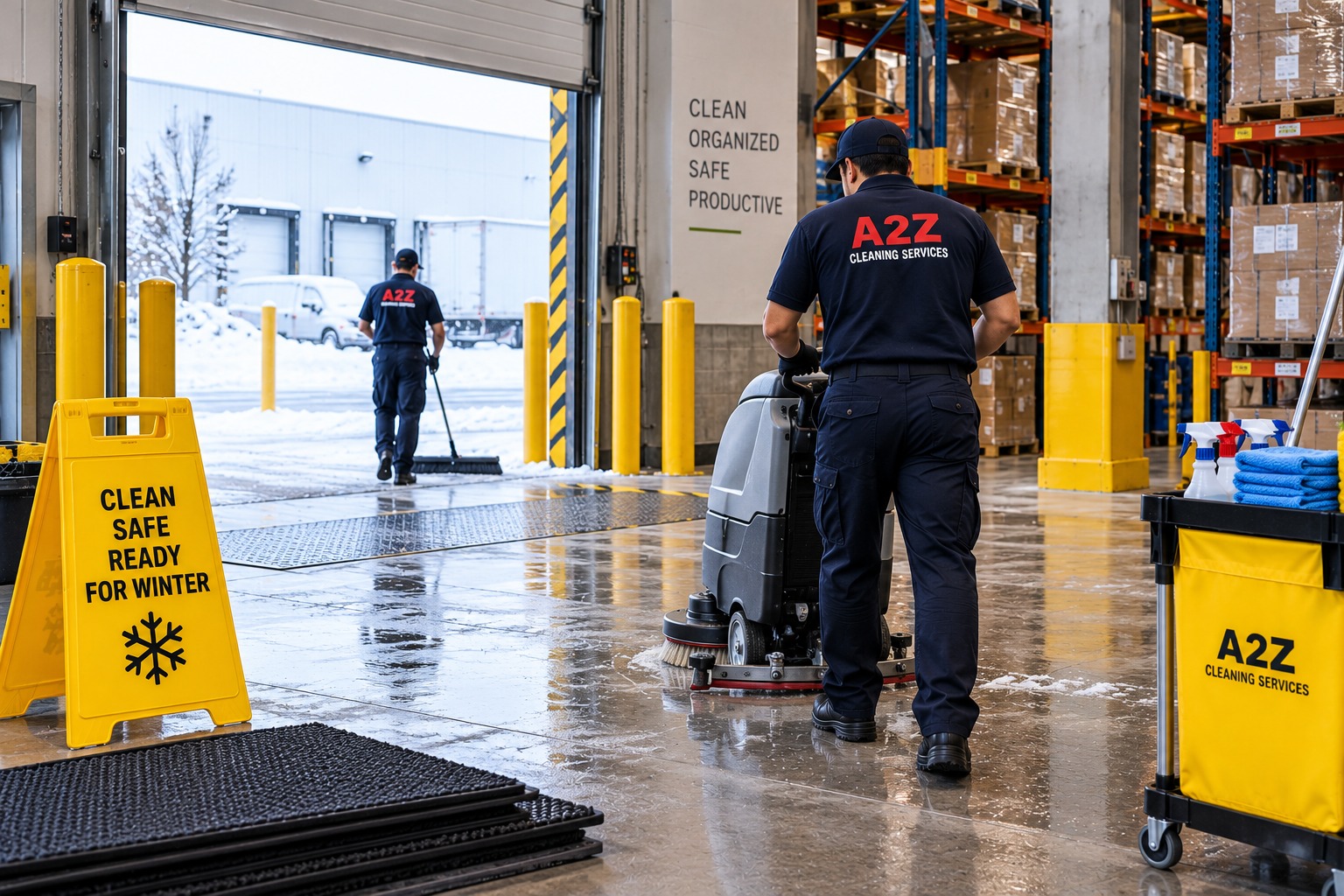
During winter, these conditions become harder to manage. Dock plates collect moisture and grit. Concrete floors show tire marks and salt residue. Pallets can bring in dirt or wet debris. Forklift paths can spread residue across the facility. Staff entrances may become wet and slippery-looking. Shipping and receiving zones may look dirty even after basic sweeping.
Dust is another concern. Cold weather may keep doors closed more often, while heating systems, product movement, packaging, racking, and traffic continue to generate dust inside. If dust is allowed to build up, it can affect appearance, employee comfort, equipment areas, and general facility standards.
That is why warehouse winter cleaning should focus on prevention, traffic control, and practical maintenance zones rather than only end-of-day cleanup.
Warehouse Winter Cleaning Checklist
A written checklist helps operations teams identify where cleaning should be focused before winter. It also helps compare cleaning quotes because every provider can respond to the same scope.
| Warehouse Area | Pre-Winter Cleaning Priority | Why It Matters |
|---|---|---|
| Loading docks | Clean dock plates, door tracks, floor edges, debris zones, and traffic paths. | Docks receive salt, slush, mud, tire residue, pallet debris, and delivery traffic throughout winter. |
| Main warehouse floors | Sweep, scrub, remove residue, review traffic lanes, and address stains or buildup. | Clean floors support safer movement, better appearance, and easier winter maintenance. |
| Staff entrances | Review mats, clean floors, remove salt residue, wipe doors, and manage wet areas. | Staff entrances can quickly spread moisture and salt into production, office, and break areas. |
| Shipping and receiving | Remove dust, pallet debris, shrink-wrap scraps, labels, packaging waste, and floor buildup. | These areas affect workflow, inventory handling, and how clean the operation feels. |
| Racking and storage zones | Review accessible dust, debris under racks, aisle edges, and storage-area buildup. | Dust and debris can collect unnoticed in areas that are busy but not always cleaned deeply. |
| Break rooms and washrooms | Detail floors, fixtures, counters, tables, dispensers, garbage, and high-touch points. | Employee spaces become more important when staff spend more time indoors during winter. |
| Office and visitor areas | Clean entrances, floors, desks, counters, glass, touchpoints, and shared spaces. | These areas shape impressions for vendors, drivers, customers, inspectors, and office staff. |
This checklist should be adjusted for your operation. A distribution centre, manufacturing warehouse, storage facility, contractor supply warehouse, food-adjacent facility, retail stockroom, logistics hub, or industrial building may all need a different cleaning plan.
What Areas Should Be Cleaned Before Winter Starts?
The first priority should be entrances and loading docks. These are the places where winter conditions enter the building. If they are not managed properly, dirt, salt, water, and debris spread quickly through the warehouse.
Main warehouse floors should also be reviewed before winter. Concrete floors, sealed floors, painted lines, safety zones, pedestrian paths, and forklift lanes can collect residue that becomes harder to manage once salt and slush arrive.
Storage areas and racking zones should be checked for dust and debris. These areas may not receive daily attention, but they can collect packaging waste, pallet fragments, dust, labels, shrink-wrap, and floor buildup. If ignored, the facility may look less organized and harder to maintain.
Employee areas matter too. Break rooms, washrooms, locker areas, offices, and staff entrances should be reset before winter because staff spend more time indoors and notice comfort issues more during colder months.
How Loading Docks Create Winter Cleaning Challenges
Loading docks are one of the most important areas to review before winter. They connect the outside environment directly to the inside operation. Snow, rain, mud, salt, tire residue, wood fragments, cardboard, and packaging debris can all collect near dock doors.
Dock plates, door tracks, bumpers, floor edges, receiving lanes, pallet staging areas, and traffic paths should be inspected before winter activity increases. If dock areas are already dirty in October or November, they may become much harder to control once freezing weather arrives.
Wet and dirty docks can also affect surrounding areas. Forklifts, pallet jacks, carts, and staff can carry residue from dock zones into storage aisles, production areas, shipping desks, offices, and washrooms.
A dock cleaning plan should include regular sweeping, debris removal, floor scrubbing when needed, entrance mat review, garbage control, and a response process for wet or high-salt days.
Dust, Debris, and Racking Areas Before Winter
Dust and debris often become more noticeable in winter because doors may stay closed, air movement changes, and indoor activity increases. Warehouses can collect dust from packaging, pallets, product movement, equipment, racking, and general operations.
Before winter, managers should review accessible racking, aisle edges, storage corners, dock-adjacent shelves, floor-wall junctions, and areas around workstations. These zones may not need the same cleaning frequency as washrooms or entrances, but they should not be ignored.
Debris control also matters. Shrink-wrap scraps, pallet pieces, labels, cardboard, dust piles, and floor clutter can make the facility feel less organized and may interfere with efficient movement.
The goal is not to make a warehouse look like a showroom. The goal is to create a cleaner, safer, more manageable industrial environment before winter makes daily maintenance harder.
Floor Care for Warehouses Before Salt and Slush Arrive
Warehouse floors carry the full weight of winter operations. Staff, forklifts, pallet jacks, carts, delivery drivers, and equipment all move across the same surfaces while salt and moisture are being tracked in.
Concrete and hard floor surfaces may need sweeping, scrubbing, spot cleaning, and residue removal before winter. If grime is already built up, winter salt can make floors appear even more stained and difficult to maintain.
Traffic lanes should be reviewed carefully. These include forklift paths, pedestrian lanes, dock-to-storage routes, receiving paths, office access routes, staff entrances, and washroom corridors. These are the areas most likely to spread winter residue.
A2Z Cleaning Services becomes the guide here because warehouse teams should not have to guess how to prepare facilities for Ontario winter. As a LIUNA Local 1059 member commercial cleaning and janitorial company with trained bonded staff and a local Southwestern Ontario presence, A2Z understands how industrial traffic, salt, moisture, dust, debris, and seasonal weather affect warehouse cleaning.
A Simple 3-Step Plan for Warehouse Winter Readiness
If your warehouse is not ready for winter cleaning pressure, start with a simple plan. The goal is to identify where the mess enters, where it spreads, and what needs to be cleaned before the season gets harder.
1. Walk the facility from every exterior access point
Start at each dock door, staff entrance, visitor entrance, parking access point, and delivery route. Walk into the building the same way employees, drivers, vendors, forklifts, and pallet traffic move through the facility.
Notice where dirt collects, where mats fail, where salt will spread, where debris builds up, and which traffic paths need more attention.
2. Separate daily cleanup from deeper industrial cleaning
Daily cleanup may include sweeping, garbage, washrooms, break rooms, visible debris, and entrance checks. Deeper industrial cleaning may include floor scrubbing, dock cleaning, dust removal, racking-area detail work, high-traffic zone cleaning, and seasonal residue removal.
This separation helps managers avoid expecting daily staff or janitorial routines to solve problems that require extra time, equipment, and planning.
3. Adjust cleaning routines before winter pressure starts
The cleaning plan should change before salt and slush arrive. Increase attention to entrances, docks, traffic lanes, employee spaces, and wet-weather response. Clarify who handles spills, debris, mats, dock residue, and seasonal floor concerns.
If your warehouse needs a pre-winter cleaning plan before salt, slush, and dock traffic increase, Request your free quote.
How to Compare Warehouse Cleaning Quotes
When comparing warehouse cleaning quotes, do not choose only by the lowest price. Compare written scope, square footage, traffic conditions, floor type, equipment needs, access, safety requirements, scheduling, supervision, and seasonal winter planning.
Ask each provider what is included for loading docks, entrances, warehouse floors, shipping and receiving, racking areas, washrooms, break rooms, offices, high-touch points, garbage zones, and high-traffic paths.
Ask whether the quote is for one-time deep cleaning, recurring industrial cleaning, janitorial support, or a blended plan. Some warehouses need a seasonal reset before winter plus ongoing cleaning support during the colder months.
If your facility is reviewing floor protection specifically, this related reading may help: winter salt floor protection for Ontario businesses.
For facilities that need broader daily or weekly support, professional janitorial services can help maintain washrooms, break rooms, offices, entrances, and shared areas while industrial cleaning addresses heavier facility needs.
What Success Looks Like Through Winter
Success looks like a warehouse that stays manageable even when weather conditions are difficult. Dock areas are cleaner. Floors are easier to maintain. Staff entrances are controlled. Debris is reduced. Break rooms and washrooms feel better. Traffic paths stay clearer.
Managers spend less time reacting to winter mess. Staff move through a cleaner facility. Drivers and vendors see a more organized operation. Salt and moisture are managed before they spread across the building.
Failure looks different. Dock areas stay dirty. Salt residue spreads. Floors become harder to clean. Dust and debris build up. Break rooms and washrooms generate complaints. Staff begin accepting mess as normal because winter feels impossible to control.
Warehouse cleaning before winter Ontario facilities schedule should be treated as operational preparation, not just cosmetic cleaning. A cleaner warehouse supports safety, workflow, morale, equipment movement, and facility professionalism.
When the plan is right, your warehouse enters winter cleaner, more organized, and easier to maintain through the toughest season of the year.
FAQ
When should Ontario warehouses schedule pre-winter cleaning?
Ontario warehouses should schedule pre-winter cleaning in October or early November before salt, slush, freezing rain, and heavy winter dock traffic increase. Early planning gives teams time to clean floors, docks, entrances, racking areas, break rooms, washrooms, and traffic paths before seasonal residue becomes harder to control.
What warehouse areas need the most cleaning before winter?
The most important areas are loading docks, staff entrances, warehouse floors, shipping and receiving zones, racking areas, traffic lanes, break rooms, washrooms, offices, garbage areas, and back doors. These areas collect salt, dust, moisture, pallet debris, packaging waste, and high-traffic residue during winter.
How does winter weather affect warehouse cleaning?
Winter weather affects warehouse cleaning by bringing salt, slush, mud, moisture, and grit into the facility through dock doors, staff entrances, parking areas, and delivery routes. Forklifts, pallet jacks, carts, and foot traffic can then spread that residue into aisles, storage zones, offices, washrooms, and break areas.
How do I compare warehouse cleaning quotes?
Compare warehouse cleaning quotes by written scope, not only price. Confirm whether docks, entrances, floors, traffic lanes, racking areas, offices, washrooms, break rooms, shipping zones, garbage areas, equipment access, scheduling, supervision, and winter salt response are included in the cleaning plan.