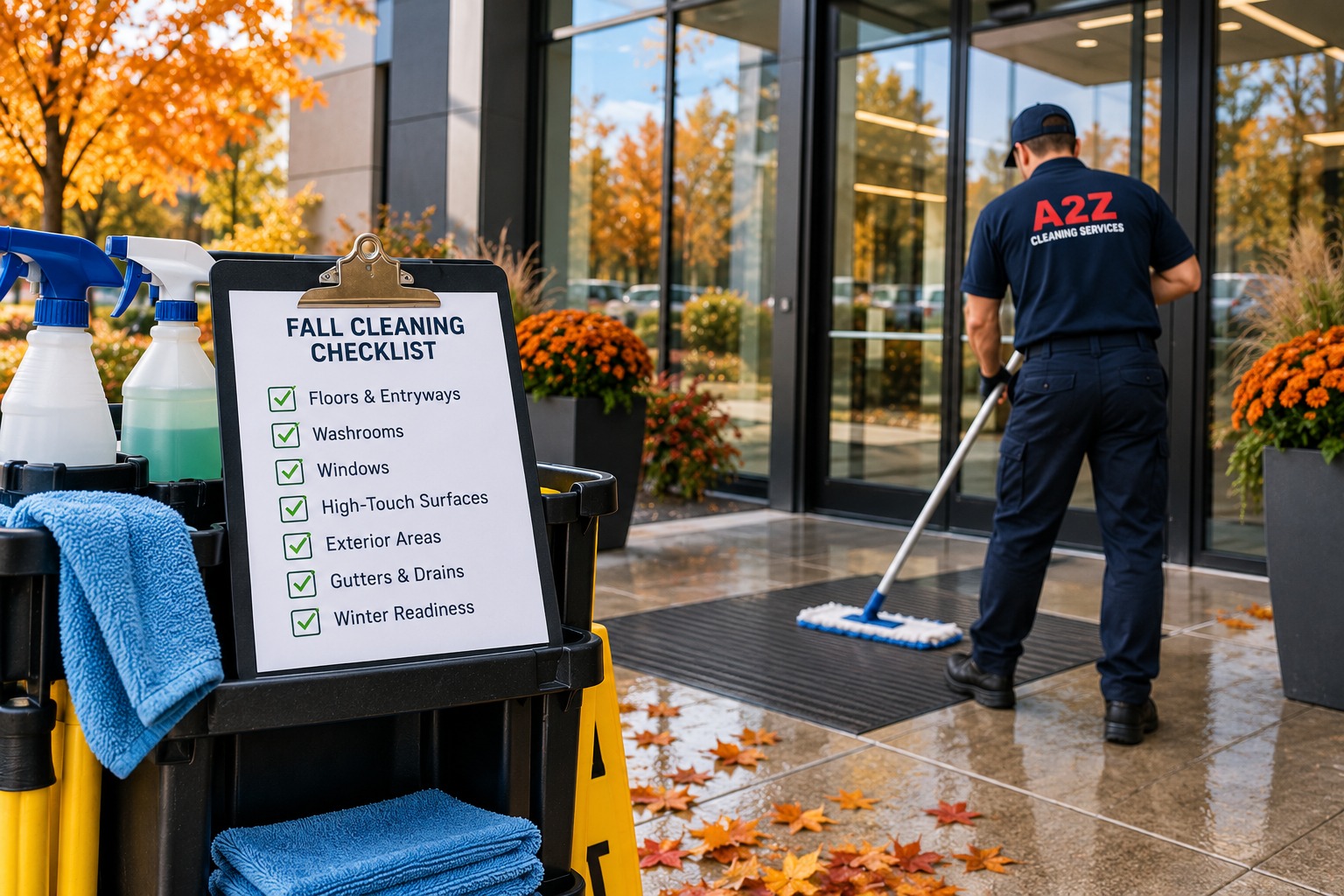
Fall is when small cleaning problems inside a facility start becoming harder to ignore. If entrances look dull, washrooms smell stale, carpets hold summer dust, or floors are not ready for wet weather, your building can feel unprepared before winter even arrives.
For facility managers, office managers, property managers, clinic administrators, condo boards, restaurant owners, gym operators, and industrial teams, a fall commercial cleaning checklist Ontario businesses can use is more than a seasonal reminder. It is a practical way to protect safety, first impressions, staff comfort, and long-term building care before colder weather creates bigger problems.
The external problem is clear: summer traffic leaves dust, fingerprints, floor wear, odours, and neglected corners behind. Then fall adds rain, leaves, mud, damp entrances, more indoor traffic, and early planning pressure for winter salt season.
The internal frustration is just as real. Managers may feel embarrassed when visitors notice dirty glass or stale washrooms. Staff may complain about lunchrooms, floors, or shared spaces. Property managers may start receiving tenant concerns. Business owners may worry the facility does not reflect the quality of the service they provide.
For buildings that need structured seasonal support, professional commercial cleaning services can help reset high-traffic areas, improve daily cleaning routines, and prepare your facility for the demands of fall and winter.
Fall Commercial Cleaning Checklist Ontario Facilities Need
A fall commercial cleaning checklist Ontario facility teams can rely on should focus on the areas that changed most over summer and the areas that will face the most pressure in winter. Fall is the bridge between warm-weather buildup and cold-weather damage.
In London, Ontario, seasonal changes can happen quickly. A facility may move from humid late-summer conditions to wet leaves, muddy entrances, colder mornings, and early salt planning within a few weeks. Businesses near downtown London, Masonville, White Oaks, Hyde Park, Byron, industrial parks, medical corridors, and retail plazas all experience these changes differently.
The best fall cleaning plan is not just “clean everything.” It identifies the highest-risk areas first: entrances, floors, carpets, washrooms, kitchens, glass, high-touch surfaces, storage rooms, garbage areas, and exterior access points.
When those areas are reviewed early, managers can prevent avoidable complaints instead of reacting to them during the busiest part of the season.
What Should Be Cleaned Before Fall Traffic Increases?
Before fall routines fully return, start with the areas people see, touch, smell, and walk through most often. These spaces shape how customers, staff, tenants, patients, students, and visitors feel about the building.
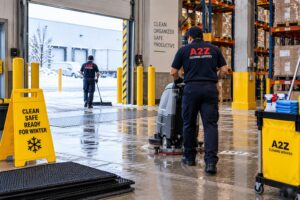
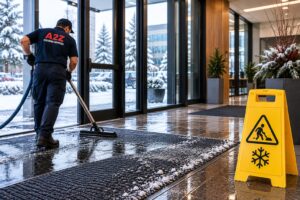
Entrances should be one of the first priorities. Summer dust, fingerprints, old matting, leaves, mud, and moisture can make the front door feel neglected. As fall weather brings more rain, a weak entrance cleaning plan can quickly affect floors, carpets, lobbies, and corridors.
Washrooms also need close attention. Warm summer weather can make odour issues worse, and those problems do not disappear on their own in fall. Fixtures, partitions, dispensers, drains, grout lines, mirrors, counters, and floor edges should all be reviewed.
Shared spaces matter too. Staff kitchens, lunchrooms, meeting rooms, waiting areas, condo amenity rooms, clinic reception areas, gym change rooms, and retail checkout zones often collect buildup gradually. A fall reset helps these spaces feel fresh before traffic increases.
Fall Cleaning Checklist by Facility Area
A clear checklist helps facility managers compare cleaning needs and assign the right work to internal staff, janitorial teams, or professional cleaners. It also makes cleaning quotes easier to compare because the scope is written clearly.
| Facility Area | Fall Cleaning Priority | Why It Matters |
|---|---|---|
| Entrances and lobbies | Clean doors, glass, mats, floors, vestibules, handles, and visible corners. | These areas create the first impression and prepare the building for rain, mud, and winter salt. |
| Floors and carpets | Vacuum, deep clean, scrub, spot treat, and inspect high-traffic paths. | Summer dust and fall moisture can make floors look worn and harder to maintain. |
| Washrooms | Detail fixtures, counters, mirrors, partitions, floors, grout, drains, and dispensers. | Washrooms are one of the most common sources of complaints, odours, and negative impressions. |
| Kitchens and lunchrooms | Clean counters, tables, sinks, appliance exteriors, cabinet faces, floors, and garbage zones. | Shared food spaces need a reset before staff routines and indoor use increase. |
| Windows and interior glass | Clean entrance glass, partitions, mirrors, reception glass, and high-touch panels. | Clear glass improves light, appearance, and the professional feel of customer-facing spaces. |
| High-touch surfaces | Review door handles, switches, railings, counters, elevator buttons, and shared equipment. | Fall is a smart time to prepare before flu season and increased indoor contact. |
| Exterior access points | Review walkways, loading docks, garbage areas, back doors, and parking entrances. | These areas affect how much dirt, moisture, and debris gets tracked inside. |
This checklist should be adapted to your facility type. A medical clinic, office, restaurant, warehouse, condo building, school, gym, hotel, or retail property will not need the same cleaning frequency or the same seasonal priorities.
Why September Is the Right Time for Fall Cleaning
September is one of the best months to review commercial cleaning because the building is entering a new operating rhythm. Staff return from summer schedules, offices become busier, restaurants shift from patio traffic to more indoor dining, clinics prepare for heavier fall appointments, and schools or childcare centres settle into routine.
It is also early enough to fix issues before winter makes them worse. If carpets are already holding dust, entrance mats are worn, floors are dull, or washrooms have odour issues, waiting until November can make the work more difficult.
Fall cleaning also supports flu season readiness. Cleaning cannot replace workplace health policies, hand hygiene, ventilation, or staying home when sick, but it can help improve the condition of shared spaces and high-touch surfaces before indoor contact increases.
For facilities across London, St. Thomas, Strathroy, Woodstock, Ingersoll, Stratford, Kitchener, Waterloo, Cambridge, and Windsor, September is a practical time to review what worked during summer and what needs to change before winter.
How Fall Cleaning Helps Prepare for Winter Salt
Ontario winter salt can damage floors, dull finishes, stain carpets, create white residue, and increase cleaning complaints. A fall plan helps prepare the facility before the first heavy salt use begins.
Start by reviewing entrance mats, vestibules, lobby floors, carpet runners, floor finish condition, and the routes people use most. If the floor already looks dull or scratched, winter salt can make the problem worse.
Hard floors may need scrubbing, finish review, or planning for strip and wax work before winter. Carpets may need cleaning before they begin absorbing moisture, salt, and dirt. Entryways may need a stronger matting and cleaning schedule.
If your building has heavy public traffic, delivery activity, tenant movement, staff shift changes, or customer-facing entrances, winter preparation should not wait until snow is already on the ground.
A2Z Cleaning Services becomes the guide here because facility teams should not have to guess which seasonal cleaning priorities matter most. As a LIUNA Local 1059 member commercial cleaning and janitorial company with trained bonded staff and a local Southwestern Ontario presence, A2Z understands how Ontario seasons affect commercial buildings, janitorial routines, floors, washrooms, entrances, and shared spaces.
A Simple 3-Step Plan for Fall Facility Cleaning
If your building needs a seasonal reset, start with a simple plan. The goal is to move from reactive cleaning to a clear fall maintenance strategy.
1. Walk the facility like a visitor
Start at the parking lot, sidewalk, or main entrance. Walk through the building the way a customer, tenant, patient, employee, parent, guest, or inspector would.
Look for dirty glass, dull floors, dust, odours, stained carpets, fingerprints, overflowing bins, washroom issues, muddy entry points, and corners that have been missed for too long.
2. Separate routine cleaning from seasonal deep cleaning
Routine cleaning keeps the building functional each day. It covers washrooms, garbage, floors, kitchens, common areas, touchpoints, and visible mess.
Seasonal deep cleaning handles buildup. This can include carpet cleaning, floor scrubbing, tile and grout cleaning, window cleaning, washroom detailing, entrance recovery, loading dock cleaning, high dusting, and pre-winter floor care.
3. Put the fall scope in writing
A written scope should list areas, tasks, frequency, products, access instructions, supply responsibilities, reporting process, and quality checks. It should also identify which tasks are routine and which are seasonal or project-based.
If your facility needs a fall cleaning reset before winter problems begin, Request your free quote.
How to Compare Fall Commercial Cleaning Quotes
When comparing fall cleaning quotes, do not choose only by the lowest price. Compare the scope, timing, staffing, supervision, products, access, safety considerations, and how the provider handles seasonal changes.
Ask each provider what is included for entrances, carpets, hard floors, washrooms, windows, kitchens, touchpoints, garbage areas, exterior access points, and winter salt preparation. Ask whether the quote includes one-time deep cleaning, recurring janitorial service, or a blended plan.
You should also ask how recommendations are made. A strong provider should be able to explain why a floor needs extra care, why an entrance needs more attention, or why a washroom odour problem may require deeper cleaning instead of another quick wipe.
If you are still evaluating providers, this related reading may help: how to choose a commercial cleaning company in London, Ontario.
For facilities that need consistent daily or weekly support, professional janitorial services can help maintain the routine standard while seasonal deep cleaning is scheduled around your building’s needs.
What Success Looks Like After a Fall Cleaning Reset
Success looks like a facility that feels ready for the season ahead. Entrances are cleaner. Floors look maintained. Washrooms smell fresher. Interior glass is clear. Staff kitchens feel better. Carpets are refreshed. High-touch areas receive attention. Managers are not waiting for complaints before taking action.
Failure looks different. Summer buildup carries into fall. Damp weather makes entrances messy. Washroom odours continue. Floors become harder to maintain. Carpets absorb more debris. Winter salt arrives before the building is prepared. Staff, tenants, customers, or visitors begin noticing the same preventable issues.
A fall commercial cleaning checklist Ontario businesses use should protect more than appearance. It should support safety, comfort, productivity, property care, and confidence in the facility.
When the plan is right, your building enters fall cleaner, safer, and better prepared for the toughest cleaning season of the year.
FAQ
What should be included in a fall commercial cleaning checklist?
A fall commercial cleaning checklist should include entrances, floors, carpets, washrooms, kitchens, windows, interior glass, high-touch surfaces, garbage areas, loading zones, and winter salt preparation. The exact scope should match the facility type, traffic level, operating hours, flooring, and seasonal risks.
Is September a good time for commercial deep cleaning?
Yes. September is a strong time for commercial deep cleaning in Ontario because facilities are transitioning from summer traffic into fall routines. It is a good time to refresh carpets, floors, washrooms, windows, entrances, and shared spaces before flu season, wet weather, and winter salt increase cleaning pressure.
How does fall cleaning help prepare for winter?
Fall cleaning helps prepare for winter by addressing buildup before salt, slush, and wet boots make it worse. Entrance mats, lobby floors, carpets, vestibules, washrooms, and high-traffic paths can be inspected, cleaned, and adjusted before winter weather creates residue, stains, odours, and floor damage.
How do I compare fall cleaning quotes?
Compare fall cleaning quotes by written scope, not only price. Confirm whether the quote includes routine cleaning, deep cleaning, carpets, floors, washrooms, windows, touchpoints, entrances, exterior access points, products, staffing, supervision, after-hours access, and winter preparation. A clear scope helps avoid missed tasks and surprise costs.