Your building exterior tells customers, tenants, staff, and delivery drivers what to expect before they step inside. If sidewalks are stained, storefronts look dusty, loading docks are coated in grime, or entrances still show winter salt residue, the property can look neglected even when the inside is clean.
For business owners, facility managers, property managers, retailers, restaurants, industrial operators, and condo boards, exterior cleaning is not just about curb appeal. It affects safety, first impressions, property value, tenant satisfaction, slip concerns, brand image, and how well your facility transitions from winter into the busy spring and summer season.
That is why spring pressure washing Ontario businesses schedule should be part of a practical seasonal maintenance plan. Winter leaves behind salt, sand, slush residue, mud, traffic grime, and stains that regular sweeping or hose rinsing may not remove effectively.
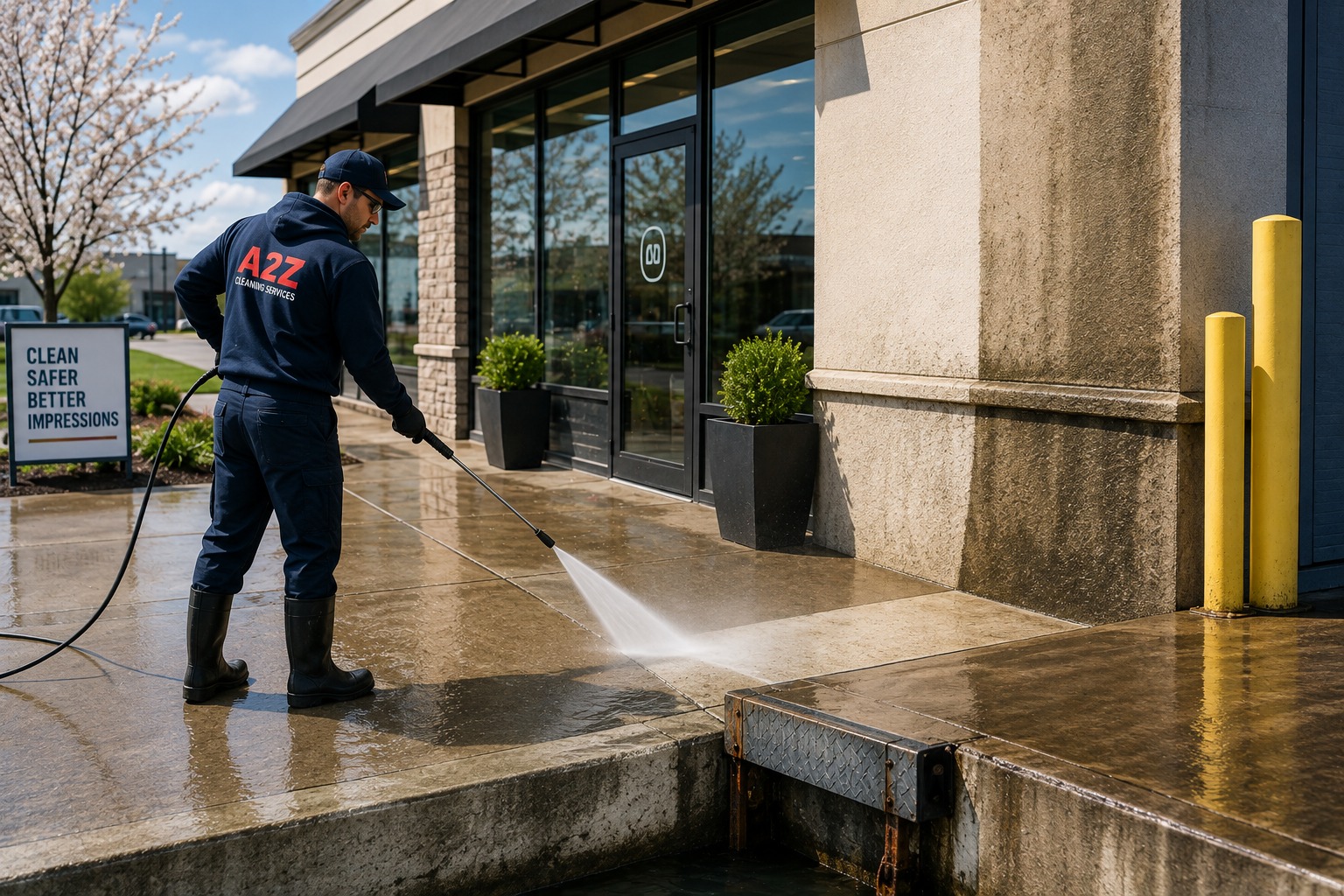
For commercial properties that need exterior support, professional pressure washing services can help refresh storefronts, walkways, entrances, loading docks, exterior surfaces, and high-traffic commercial areas before seasonal buildup becomes harder to manage.
Spring Pressure Washing Ontario Businesses: Why It Matters
Spring pressure washing Ontario facilities need is about removing the residue winter leaves behind. Salt, sand, dirt, mud, oil spots, tire marks, food spills, and general grime can build up around entrances, sidewalks, parking edges, loading docks, patios, and exterior walls.
In London, Ontario, winter and spring conditions can be hard on commercial properties. Snow, freezing rain, road salt, thaw cycles, wet boots, delivery traffic, and parking lot runoff can all leave visible marks on concrete, brick, siding, loading areas, and walkways.
The external problem is easy to see: stained sidewalks, dirty entrances, dull storefronts, greasy dock areas, and buildup near high-traffic doors. The internal frustration is more serious. Managers may feel embarrassed by the property’s appearance, worried about slip concerns, or frustrated that routine cleaning inside the building is being undermined by a dirty exterior.
The stakes of inaction can build quickly. Customers may assume the property is poorly maintained. Tenants may complain. Staff may track dirt back indoors. Loading dock grime may create odour, pest, or safety concerns. A building can lose its professional appearance long before anyone reviews the deeper maintenance plan.
What Areas Benefit Most From Pressure Washing?
The areas that benefit most from pressure washing are usually the places that collect traffic, moisture, spills, salt, and exterior grime. These zones are often visible, heavily used, and difficult to clean properly with basic tools.
Storefront entrances are a top priority because they shape the first impression. Dirty concrete, salt stains, gum marks, mud, fingerprints, and runoff near the front door can make a business look less professional before customers even walk in.
Walkways and sidewalks also matter. They collect winter salt, sand, leaves, pollen, spills, and foot traffic residue. A cleaner walkway helps the property look brighter and more cared for.
Loading docks are another high-value area. Delivery zones often collect tire marks, dust, debris, oil, grease, pallet residue, packaging waste, and moisture. If dock areas are not maintained, dirt can move into warehouses, stockrooms, kitchens, and production spaces.
Commercial Pressure Washing Checklist for Storefronts and Docks
A clear checklist helps facility managers identify the areas that need seasonal attention. It also makes it easier to compare pressure washing quotes because each provider can respond to the same scope.
| Area | Common Problem | Why Pressure Washing Helps |
|---|---|---|
| Storefront entrances | Salt residue, dirt, mud, gum, spills, and visible staining. | Improves curb appeal and helps the entrance feel cleaner before customers step inside. |
| Sidewalks and walkways | Winter grime, sand, rain marks, organic buildup, and foot traffic residue. | Refreshes high-visibility walking areas and supports a cleaner exterior presentation. |
| Loading docks | Tire marks, dust, debris, grease, oil spots, pallet residue, and dirt buildup. | Helps reduce grime in delivery zones and supports safer, cleaner operations. |
| Restaurant patios | Food spills, drink stains, grease tracking, dust, pollen, and patio-season buildup. | Prepares outdoor dining areas for guests and helps remove residue before reopening or resetting. |
| Garbage and service areas | Odours, spills, stains, leakage, organic residue, and foot traffic. | Helps control odour sources and keeps service zones from looking neglected. |
| Exterior walls and lower facades | Dirt splashback, salt spray, dust, cobwebs, and weather staining. | Improves the visible condition of the building exterior and supports brand presentation. |
| Parking lot edges and entrances | Road grime, tire residue, salt, mud, and tracked-in debris. | Helps reduce the amount of dirt carried into the building through main access points. |
This checklist should be adapted to your property type. A retail plaza, restaurant, industrial building, warehouse, condo property, clinic, school, hotel, or office building may all need a different pressure washing scope.
How Often Should Commercial Pressure Washing Be Scheduled?
Most Ontario commercial properties should review pressure washing needs seasonally. Spring is often the most important time because it removes winter residue and prepares the property for higher outdoor traffic, better weather, and stronger curb appeal.
Some facilities may also need summer or fall pressure washing. Restaurants with patios, buildings near busy roads, warehouses with active loading docks, and properties with heavy foot traffic may need exterior cleaning more than once per year.
The right frequency depends on building use, visibility, weather exposure, surface type, traffic level, and how quickly grime returns. A quiet office set back from the road may need less frequent pressure washing than a storefront on a busy street or a dock that receives deliveries all day.
Signs that your property needs pressure washing include visible staining, salt residue, slippery-looking buildup, gum, darkened concrete, grease marks, odours near service areas, dirty dock surfaces, or a storefront that looks dull even after routine cleaning.
Why Spring Is the Best Time to Reset Exterior Cleaning
Spring is the best time for pressure washing because winter buildup is still visible and can be removed before it becomes part of the property’s normal appearance. Snowmelt often reveals salt stains, mud, debris, grime, and residue that were hidden during colder months.
Spring also comes before the highest visibility seasons for many businesses. Customers return to patios, storefront traffic increases, outdoor signage becomes more noticeable, and visitors spend more time walking from parking lots to entrances.
For restaurants, spring pressure washing can prepare patios, walkways, and service areas before outdoor dining becomes busier. For retail properties, it can improve curb appeal before seasonal shopping periods. For industrial and warehouse facilities, it can refresh loading zones after winter grime and delivery traffic.
Even if you are planning content or maintenance in late summer or fall, this topic is still valuable because SEO planning should happen before peak seasonal demand. Publishing early gives the page time to gain visibility before property managers begin searching for spring exterior cleaning services.
Pressure Washing Safety and Surface Considerations
Pressure washing should be planned carefully because not every surface should be treated the same way. Concrete, brick, siding, painted surfaces, dock areas, stone, walkways, and entrance mats may all require different pressure levels, products, and methods.
Using too much pressure on the wrong surface can cause damage. Using too little pressure may not remove buildup. The cleaning approach should match the material, condition, staining, drainage, surrounding areas, and business operations.
Safety also matters. Pressure washing can create wet surfaces, overspray, noise, temporary access limitations, and runoff. The work should be scheduled to reduce disruption to customers, staff, tenants, deliveries, and pedestrians.
A2Z Cleaning Services becomes the guide here because exterior cleaning should not be a guessing game. As a LIUNA Local 1059 member commercial cleaning and janitorial company with trained bonded staff and a local Southwestern Ontario presence, A2Z understands how seasonal Ontario conditions affect commercial buildings, storefronts, walkways, and loading docks.
A Simple 3-Step Plan for Exterior Cleaning
If your storefront or dock area looks tired after winter, start with a simple plan. The goal is to identify the highest-impact areas, schedule the work at the right time, and keep the property looking cared for.
1. Walk the property from the customer’s view
Start at the parking lot, sidewalk, or main entrance. Look at the building the way a customer, tenant, inspector, delivery driver, or visitor would.
Notice salt stains, dirty concrete, gum, mud, cobwebs, stains, spills, dull walkways, grease marks, garbage areas, and loading zones that look neglected.
2. Separate public-facing areas from service areas
Public-facing areas include storefronts, entrances, walkways, patios, exterior glass zones, and sidewalks. These areas affect first impressions and should usually be cleaned before busy customer-facing seasons.
Service areas include loading docks, garbage areas, rear entrances, delivery paths, and staff access zones. These areas may not be visible to customers, but they can affect operations, odour control, safety, and how much dirt is tracked inside.
3. Schedule pressure washing before peak traffic
Pressure washing should be scheduled before the season when your exterior matters most. For many Ontario businesses, that means spring. For patios, restaurants, retail entrances, and loading docks, late summer or fall may also be useful before winter conditions arrive.
If your property needs a seasonal exterior cleaning plan for storefronts, walkways, or docks, Request your free quote.
How to Compare Pressure Washing Quotes
When comparing pressure washing quotes, do not choose only by the lowest price. The scope, surface type, access, water source, scheduling, safety planning, and expected result all matter.
Ask each provider which areas are included. Does the quote cover storefront concrete, sidewalks, entrances, patios, loading docks, garbage areas, exterior walls, lower facades, or only one surface? Does it include pre-treatment for heavy grime or stain-prone zones if needed?
Ask how the work will be scheduled. A restaurant may need after-hours service. A warehouse may need dock areas cleaned in sections. A retail plaza may need work done before opening or during lower-traffic periods. A condo building may need resident notices before access areas are cleaned.
If you are reviewing exterior cleaning as part of a broader facility plan, this related reading may help: pressure washing for loading docks.
For facilities that need year-round support beyond exterior cleaning, commercial cleaning services can help maintain interior spaces while seasonal pressure washing supports the building exterior.
What Success Looks Like After Pressure Washing
Success looks like a property that feels refreshed before anyone reaches the door. Storefront walkways look cleaner. Loading docks look better maintained. Entrances are free from winter residue. Patios feel more guest-ready. Staff and customers see a building that looks cared for.
Failure looks different. Salt stains remain through summer. Grime collects near doors. Dock residue tracks inside. Service areas smell worse in warm weather. Customers see a tired entrance, and staff keep trying to manage the inside while the exterior works against them.
Spring pressure washing Ontario facilities schedule should be viewed as part of seasonal property care. It does not replace routine cleaning, landscaping, repairs, or safety procedures, but it supports a cleaner, safer, more professional building appearance.
When the plan is right, your storefront, walkway, or dock area helps your business make a stronger first impression from the outside in.
FAQ
When should Ontario businesses schedule pressure washing?
Many Ontario businesses schedule pressure washing in spring to remove winter salt, sand, mud, and grime before customer traffic increases. Some properties also benefit from late summer or fall cleaning, especially restaurants, loading docks, storefronts, patios, garbage areas, and facilities near busy roads or heavy delivery zones.
What commercial areas can be pressure washed?
Commercial pressure washing can support storefront entrances, sidewalks, walkways, loading docks, patios, service areas, garbage zones, parking lot edges, lower exterior walls, and some building facades. The right approach depends on surface material, staining, drainage, access, safety needs, and the condition of the property.
Is pressure washing safe for all commercial surfaces?
No. Different surfaces require different pressure levels, products, and techniques. Concrete, brick, siding, painted surfaces, stone, and dock areas should not all be treated the same way. A professional provider should review surface condition, access, drainage, and risk before choosing the cleaning method.
How do I compare commercial pressure washing quotes?
Compare quotes by written scope, not only price. Confirm which areas are included, what surfaces will be cleaned, whether heavy staining needs pre-treatment, how access and water source are handled, when the work will be scheduled, and how the provider manages safety, runoff, pedestrians, staff, tenants, or deliveries.