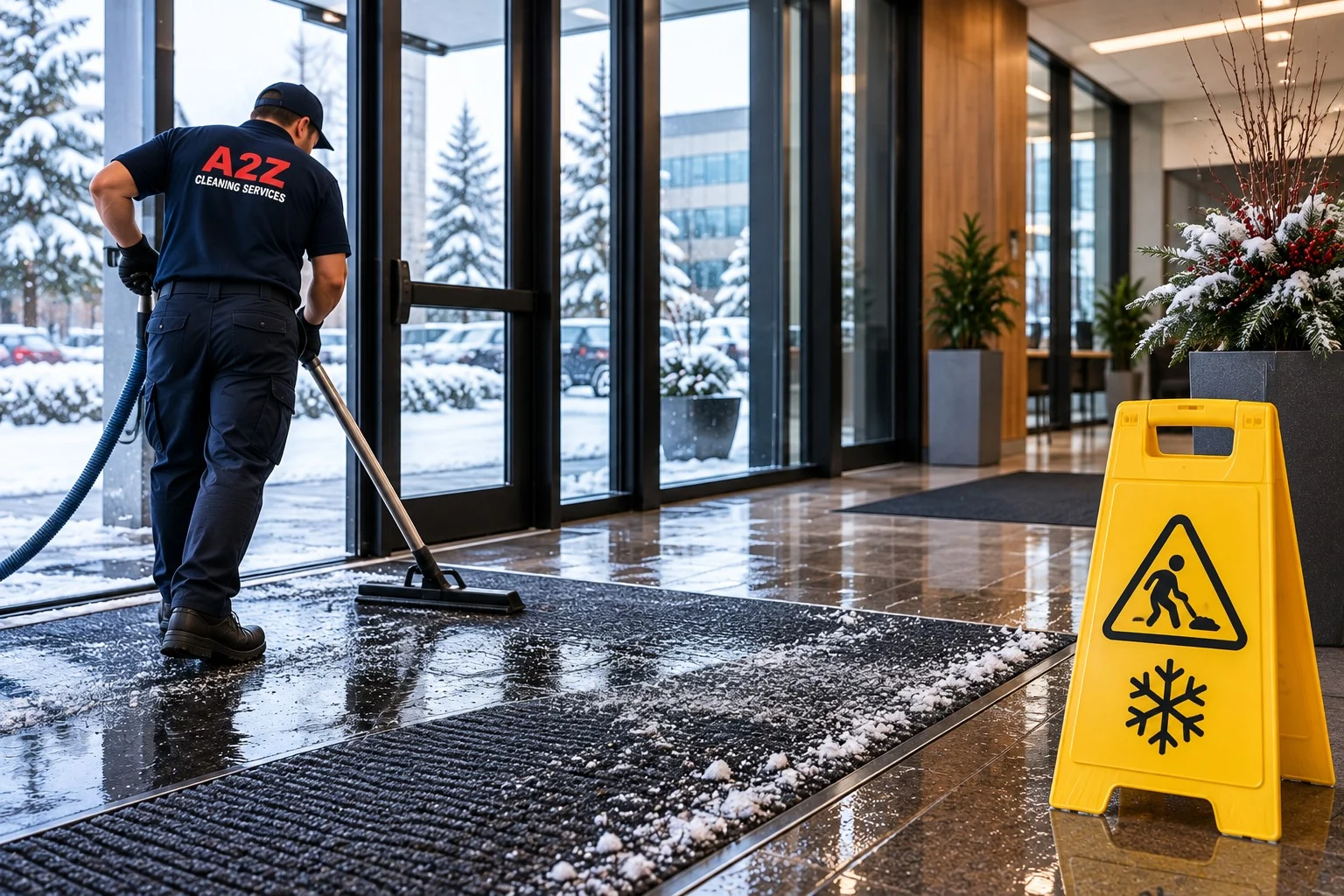
Winter salt is useful outside, but it can be harsh inside your building. Once salt, slush, grit, and moisture are tracked through entrances, they can quickly leave white residue, dull floor finishes, stain carpets, damage mats, and make high-traffic areas look dirty shortly after cleaning.
For facility managers, property managers, office managers, clinic administrators, restaurant owners, condo boards, retail operators, warehouse teams, and industrial supervisors, winter salt floor protection Ontario businesses need is not just a cleaning concern. It affects safety, first impressions, flooring lifespan, tenant satisfaction, employee comfort, customer confidence, and long-term maintenance costs.
The external problem is easy to see: salt lines near entrances, wet mats, cloudy tile, stained carpets, slippery-looking lobby floors, and white marks that return every day. The internal frustration is just as real. Managers may feel like their cleaning team is constantly chasing the same mess without solving the problem.
For businesses that need structured seasonal support, commercial strip and wax services can help protect suitable hard floors before winter wear becomes more difficult to manage.
Winter Salt Floor Protection Ontario Businesses Need
Winter salt floor protection Ontario businesses use should begin before the worst weather arrives. Once snow, freezing rain, slush, and salt become part of the daily routine, floors require more than basic mopping. They need a plan that controls residue at the entrance and prevents it from spreading deeper into the building.
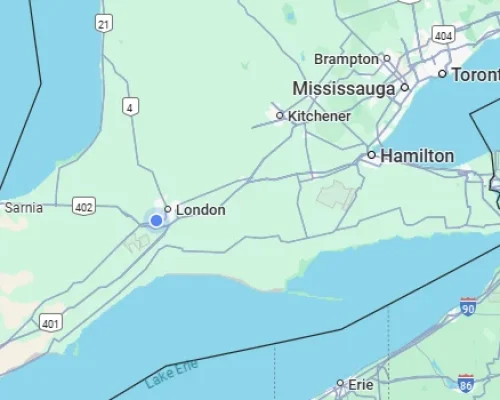
In London, Ontario, winter conditions can change quickly. A normal workday can begin with wet sidewalks, turn into freezing rain, and end with salted parking lots, slushy entrances, and heavy foot traffic through lobbies, corridors, offices, waiting rooms, elevators, and washrooms.
This matters for offices, clinics, restaurants, schools, condo buildings, retail stores, gyms, hotels, warehouses, industrial sites, and commercial properties across Southwestern Ontario. Different buildings have different traffic patterns, but the same issue appears again and again: winter residue starts at the entrance and spreads inward.
The goal is not to eliminate salt completely. That is not realistic during Ontario winter. The goal is to reduce how much salt enters the building, remove it before it damages surfaces, and adjust cleaning routines so floors stay safer and more presentable.
Why Winter Salt Damages Commercial Floors
Salt can be difficult on commercial flooring because it does not stay outside. People carry it in on boots, shoes, carts, delivery equipment, strollers, mobility devices, and floor mats. Once inside, it mixes with water, dirt, grit, and cleaning residue.
On hard floors, salt and grit can dull the finish and create a cloudy appearance. As people walk over it, the abrasive material can act like sandpaper against tile, vinyl, stone, concrete, or finished flooring. Even when the floor is mopped, residue may return as white marks after drying.
On carpets, salt can settle into fibres and leave stains, stiffness, odours, and visible traffic lanes. Carpets near entrances, reception areas, hallways, elevators, and waiting rooms are especially vulnerable because they absorb moisture and grit throughout the day.
Salt also creates perception problems. A lobby may have been cleaned in the morning, but if salt residue appears by noon, visitors may assume the building is not maintained. That is why winter floor protection must be proactive, not only reactive.
Winter Salt Floor Protection Checklist
A practical checklist helps facility teams identify where salt enters, where it spreads, and which areas need more attention during winter. It also helps compare cleaning quotes because each provider can respond to the same seasonal priorities.
| Area | Winter Salt Risk | Protection Priority |
|---|---|---|
| Main entrances | Salt, slush, wet boots, mud, and grit are carried in from sidewalks and parking lots. | Use proper matting, increase entrance checks, clean door tracks, and mop edges frequently. |
| Lobbies and reception areas | Salt residue can spread quickly and damage the first impression of the building. | Schedule frequent floor checks, spot cleaning, and winter-specific hard floor maintenance. |
| Carpeted entry zones | Salt and moisture can settle into fibres, leaving stains, odours, and stiff traffic lanes. | Vacuum thoroughly, spot treat, clean mats, and schedule carpet cleaning when needed. |
| Tile and grout | Grout lines can trap salt, moisture, dirt, and residue that routine mopping may not remove. | Clean grout lines, floor edges, washroom tile, and high-traffic transition areas. |
| Hallways and corridors | Winter residue moves from entrances into deeper building areas through repeated traffic. | Review traffic paths, corners, baseboards, elevator areas, and high-use walking lanes. |
| Washroom floors | Wet shoes, salt, moisture, and heavy indoor traffic can make washrooms look dirtier faster. | Detail floors, partitions, drains, corners, grout, and fixture-area buildup. |
| Loading docks and back doors | Delivery traffic can track salt, grease, tire residue, and debris into work areas. | Clean back entrances, dock paths, staff doors, warehouse transitions, and service corridors. |
This checklist should be adapted to your building. A small office does not need the same winter floor routine as a medical clinic, retail plaza, restaurant, condo building, gym, warehouse, school, or industrial facility.
How Entrance Matting Helps Control Salt
Entrance matting is one of the most important tools for winter salt floor protection. A good matting strategy helps capture moisture, grit, and salt before they spread across the building.
Mats should be placed where people actually walk, not only where they look neat. In busy buildings, a small mat inside the front door is often not enough. People need enough mat length to take several steps before reaching the main floor surface.
Matting should be reviewed at public entrances, staff doors, delivery entrances, loading docks, parking access points, vestibules, elevators, and any area where people enter from outside. If salt is appearing beyond the mat, the matting plan may not be large enough or clean enough.
Mats must also be maintained. A saturated mat can stop working properly and may become part of the problem. During winter, mats may need more frequent vacuuming, replacement, drying, or cleaning depending on traffic and weather.
How Often Should Floors Be Cleaned During Winter?
Winter floor cleaning frequency should increase when weather, traffic, and salt exposure increase. A routine that works in summer may not be enough when every visitor brings in moisture, grit, and residue.
Busy buildings may need entrance checks several times per day, especially during snow, rain, freezing rain, or high-salt periods. Lobbies, corridors, elevators, washrooms, and reception areas may need extra attention during peak traffic.
Daily cleaning should focus on visible residue, wet areas, garbage, washrooms, kitchens, high-touch points, vacuuming, mopping, and entrance recovery. Periodic deeper cleaning may be needed for carpets, grout, floor edges, mats, and hard floor finish protection.
The right frequency depends on building size, flooring type, number of entrances, visitor traffic, staff count, weather exposure, operating hours, and how quickly salt residue returns after cleaning.
Hard Floors, Carpets, Tile, and Grout Need Different Protection
Not all floors respond to winter salt the same way. A strong winter floor plan should separate hard floors, carpets, tile, grout, concrete, mats, and finished surfaces instead of treating everything with one approach.
Hard floors may need more frequent dust mopping, wet mopping, scrubbing, and finish review. If a protective finish is worn, salt and grit can make the surface look dull faster and harder to restore.
Carpets need strong vacuuming and spot treatment. Salt, moisture, and grit can settle into fibres and become harder to remove if ignored. Carpets near entrances, hallways, reception areas, and waiting rooms should be monitored closely.
Tile and grout need special attention because grout can trap residue even when tile appears clean. This is common in washrooms, entry areas, restaurants, clinics, schools, and shared commercial spaces.
A2Z Cleaning Services becomes the guide here because facility teams should not have to guess how to protect floors through Ontario winter. As a LIUNA Local 1059 member commercial cleaning and janitorial company with trained bonded staff and a local Southwestern Ontario presence, A2Z understands how salt, slush, moisture, and traffic affect commercial buildings.
A Simple 3-Step Plan for Winter Salt Floor Protection
If your building struggles with salt residue every winter, start with a simple plan. The goal is to reduce salt entry, remove residue quickly, and protect flooring before the damage becomes more visible.
1. Map every entrance and traffic path
Walk from the parking lot, sidewalk, delivery entrance, staff door, and loading dock into the building. Follow the path salt takes into lobbies, corridors, elevators, offices, washrooms, storage rooms, and service areas.
Notice where residue appears first, where mats get soaked, where floors look dull, and where salt travels beyond the entrance zone.
2. Match the cleaning routine to winter conditions
Your winter routine should change on storm days, high-salt days, and heavy-traffic days. Entrances may need more checks, mats may need more maintenance, and high-traffic paths may need extra mopping or vacuuming.
The cleaning plan should be flexible enough to respond to weather instead of following the exact same summer routine.
3. Schedule deeper floor care before problems spread
Salt and grit buildup can become harder to remove if it sits too long. Schedule deeper floor care for carpets, tile, grout, hard floors, and mats before residue spreads through the building or stains become more visible.
If your building needs a winter floor protection plan before salt damage becomes harder to manage, Request your free quote.
How to Compare Winter Floor Protection Quotes
When comparing cleaning quotes, do not choose only by the lowest price. Winter floor protection depends on scope, frequency, flooring type, traffic, matting, products, supervision, access, and weather response.
Ask each provider what is included for entrances, mats, carpets, hard floors, tile, grout, lobbies, corridors, washrooms, loading docks, staff doors, and back entrances. Ask whether the quote includes routine janitorial service, seasonal deep cleaning, floor care, or a blended plan.
You should also ask how the provider handles changing weather. A strong winter cleaning plan should account for storms, freezing rain, salt-heavy days, tenant movement, customer traffic, deliveries, and after-hours access.
If you are preparing your floors before winter fully arrives, this related reading may help: pre-winter floor care for Ontario commercial buildings.
For facilities that need ongoing seasonal cleaning support, professional janitorial services can help maintain entrances, washrooms, floors, touchpoints, and shared spaces through winter.
What Success Looks Like Through Winter
Success looks like a building that stays cleaner even when the weather is not cooperating. Entrances are controlled. Mats are maintained. Salt residue is addressed before it spreads. Carpets look better. Hard floors stay more presentable. Lobbies and corridors are easier to manage.
Managers spend less time reacting to repeated complaints. Staff feel more confident walking through entrance areas. Customers, tenants, patients, or visitors see a property that looks cared for even during messy weather.
Failure looks different. White salt marks return every day. Mats stay soaked. Carpets stain. Grout darkens. Lobbies look dirty shortly after cleaning. Floors become dull, slippery-looking, and harder to restore. The building feels like it is losing the winter floor battle.
Winter salt floor protection Ontario businesses schedule should be treated as preventive maintenance, not only cleanup. The earlier the plan is in place, the easier it is to protect appearance, flooring condition, safety, and visitor confidence.
When the plan is right, your building can stay cleaner, safer, and more professional through the toughest floor care season of the year.
FAQ
How can businesses protect floors from winter salt?
Businesses can protect floors from winter salt by using proper entrance mats, increasing winter cleaning frequency, vacuuming carpets, mopping residue quickly, cleaning grout lines, inspecting high-traffic paths, and scheduling deeper floor care before salt buildup spreads. The plan should match the building’s traffic, flooring, entrances, and weather exposure.
Why does salt leave white marks on floors?
Salt leaves white marks when moisture dries and mineral residue remains on the floor surface. This can happen after people track in salt, slush, and grit from sidewalks or parking lots. If residue is not removed properly, it can reappear after mopping and make floors look dirty again.
Do entrance mats prevent winter floor damage?
Entrance mats help reduce winter floor damage, but they do not solve the problem alone. Mats must be large enough, placed in the right traffic path, and cleaned or changed regularly. They work best when combined with frequent floor checks, vacuuming, mopping, spot cleaning, and seasonal floor care.
How do I compare winter floor cleaning quotes?
Compare winter floor cleaning quotes by written scope, not only price. Confirm whether entrances, mats, carpets, hard floors, tile, grout, washrooms, loading docks, staff doors, and high-traffic paths are included. Ask how the provider responds to storms, freezing rain, salt-heavy days, and changing winter conditions.