Flu season can make small office cleaning gaps feel much bigger. When more people work indoors, share meeting rooms, use the same kitchens, touch the same doors, and move through the same washrooms every day, cleanliness becomes part of workplace confidence.
For office managers, business owners, property managers, HR teams, clinic administrators, coworking operators, and facility managers, a flu season cleaning checklist Ontario offices can use is not only about making the workplace look better. It supports employee comfort, client confidence, high-touch surface care, odour control, washroom standards, and a more organized plan for the colder months.
The external problem is easy to see: smudged door handles, dusty desks, stale boardrooms, busy washrooms, shared kitchens, overflowing bins, and high-touch areas that may not receive enough attention during the day.
The internal frustration is more serious. Managers may worry about staff complaints, sick-day disruption, visitor impressions, and whether the cleaning routine is strong enough for the season. Employees may feel uncomfortable using shared spaces if they do not look or smell clean.
For workplaces that need reliable seasonal support, professional office cleaning services can help maintain washrooms, kitchens, floors, shared spaces, and high-touch surfaces during the months when indoor contact increases.
Flu Season Cleaning Checklist Ontario Offices Need
A flu season cleaning checklist Ontario offices use should focus on the areas people touch, share, and judge most often. The goal is not to create panic or overpromise health outcomes. The goal is to make the office cleaner, more consistent, and better prepared for the season.
In London, Ontario, October is a practical time to review office cleaning. Cooler weather pushes people indoors, meetings become more frequent, windows stay closed more often, and shared office areas begin seeing heavier daily use.
This matters for offices near downtown London, Masonville, Hyde Park, White Oaks, Byron, Wellington Road, Oxford Street, medical office areas, commercial plazas, and business parks. Different offices have different traffic patterns, but the same principle applies: the cleaning plan should match how the space is actually used.
Flu season cleaning should never replace workplace health policies, hand hygiene, ventilation, or staying home when sick. It should support those efforts by keeping shared spaces, washrooms, kitchens, desks, and touchpoints cleaner and easier to manage.
What Office Areas Need the Most Attention During Flu Season?
The most important areas are the spaces used by multiple people throughout the day. These include entrances, reception areas, washrooms, meeting rooms, shared desks, kitchens, lunchrooms, printer stations, elevators, stair rails, and common corridors.
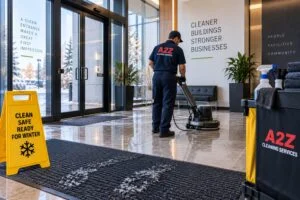
Reception areas matter because they shape the first impression for clients, vendors, staff, and visitors. A clean reception desk, clear glass, wiped door handles, tidy seating, and maintained floors help the office feel professional and cared for.
Washrooms are one of the strongest signs of workplace cleanliness. If washrooms are not cleaned consistently, employees and visitors notice quickly. Fixtures, counters, mirrors, partitions, dispensers, floors, drains, and door handles should all be part of the plan.
Meeting rooms and shared workspaces also need extra attention. Tables, chair arms, presentation equipment, door handles, light switches, and shared surfaces can be touched by many people in one day.
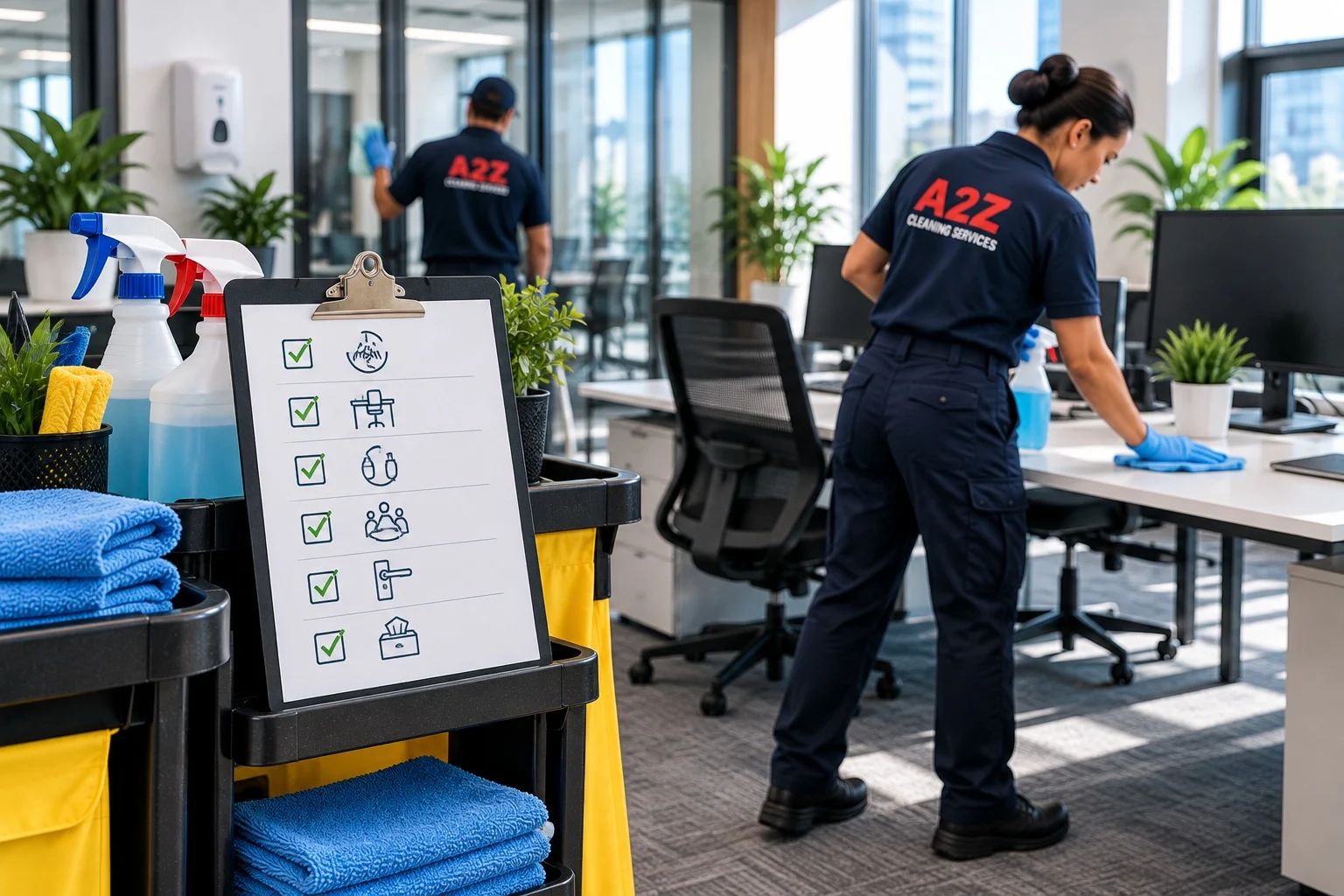
Office Flu Season Cleaning Checklist
A written checklist helps office managers separate routine cleaning from seasonal priorities. It also makes cleaning company quotes easier to compare because the scope is clear from the start.
| Office Area | Flu Season Cleaning Priority | Why It Matters |
|---|---|---|
| Reception and entrances | Clean doors, handles, counters, seating, glass, mats, floors, and visible touchpoints. | These areas create the first impression and receive traffic from staff, clients, and visitors. |
| Washrooms | Clean fixtures, counters, mirrors, partitions, dispensers, floors, drains, and door handles. | Washrooms are high-use spaces where odours, supply issues, and visible neglect are noticed quickly. |
| Desks and workstations | Dust accessible surfaces, empty bins, clean chair arms, and review shared desk areas. | Employees feel more comfortable when their workspace looks organized and maintained. |
| Meeting rooms | Clean tables, chairs, door handles, light switches, presentation surfaces, floors, and waste bins. | Meeting rooms often host several groups in one day and should be reset between heavy use periods. |
| Kitchens and lunchrooms | Clean counters, sinks, appliance handles, tables, chairs, cabinet fronts, floors, and garbage areas. | Shared food spaces can quickly become odour, mess, and staff complaint zones. |
| High-touch surfaces | Clean door handles, railings, elevator buttons, switches, counters, printers, and shared equipment. | These surfaces receive repeated contact and should be clearly included in the cleaning scope. |
| Floors and carpets | Vacuum, mop, spot treat, clean entrance paths, and review areas affected by rain, mud, or early salt. | Fall and winter weather can make floors look dirty faster and increase tracking through the office. |
This checklist should be adapted to your office type. A law office, accounting firm, medical administration office, insurance office, real estate brokerage, call centre, coworking space, or professional services firm may all need a different cleaning schedule.
How Often Should Office Cleaning Increase During Flu Season?
Office cleaning frequency should be based on staff count, visitor traffic, washroom use, shared desks, kitchens, meeting rooms, and operating hours. A quiet office may not need the same schedule as a busy workplace with daily clients, multiple washrooms, and heavy meeting room use.
Many offices benefit from daily or several-times-per-week cleaning during flu season, especially when washrooms, kitchens, garbage, floors, and touchpoints see regular use. Smaller offices may need a lighter schedule, but high-use areas should still be reviewed consistently.
The best approach separates daily cleaning from periodic deep cleaning. Daily cleaning handles visible mess, garbage, washrooms, kitchens, floors, and high-touch points. Deep cleaning handles carpets, detailed dusting, floor edges, baseboards, glass, upholstery, and areas that collect buildup over time.
This distinction helps avoid unrealistic expectations. Routine janitorial work keeps the office stable. Seasonal deep cleaning corrects buildup and prepares the workplace for heavier indoor use.
Why October Is a Smart Time to Review Office Cleaning
October is a smart time to review office cleaning because the workplace is entering the colder indoor season. Staff are spending more time inside, meetings are more frequent, and shared spaces are used more consistently than during summer.
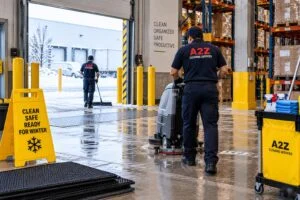
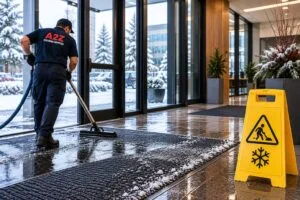
It is also early enough to correct cleaning gaps before winter weather adds another layer of pressure. Once salt, slush, wet boots, and heavy coats arrive, floors, entrances, carpets, and washrooms often need more frequent attention.
Flu season planning also works better when it is proactive. Waiting until complaints increase can make the cleaning plan feel reactive and stressful. A written October checklist helps managers clarify expectations before the busiest months of indoor traffic.
For offices across London, St. Thomas, Strathroy, Woodstock, Ingersoll, Stratford, Kitchener, Waterloo, Cambridge, and Windsor, this is the right time to review cleaning scope, frequency, supplies, access instructions, and reporting procedures.
High-Touch Cleaning Without Overcomplicating the Plan
High-touch cleaning should be practical and clearly defined. It should not rely on vague promises or unclear language. The cleaning scope should identify which surfaces are included, how often they are cleaned, and who is responsible for them.
Common high-touch surfaces include door handles, push plates, light switches, elevator buttons, stair rails, reception counters, meeting tables, printer buttons, shared phones, kitchen handles, washroom fixtures, and shared equipment.
Office managers should also decide which areas are handled by the cleaning provider and which are handled by internal staff during the workday. For example, a cleaning team may handle after-hours cleaning, while staff may be responsible for wiping shared kitchen spills during business hours.
A2Z Cleaning Services becomes the guide here because office teams should not have to guess which cleaning priorities matter during flu season. As a LIUNA Local 1059 member commercial cleaning and janitorial company with trained bonded staff and a local Southwestern Ontario presence, A2Z understands how seasonal office traffic affects washrooms, kitchens, floors, desks, and shared spaces.
A Simple 3-Step Plan for Flu Season Office Cleaning
If your office needs a stronger cleaning routine for flu season, start with a simple plan. The goal is to make expectations clear, strengthen daily cleaning, and reduce preventable complaints.
1. Walk the office during a normal workday
Do not inspect only when the office is empty. Walk through the space during regular activity and observe how people actually use reception areas, desks, meeting rooms, kitchens, washrooms, corridors, and shared equipment.
This helps identify the surfaces and spaces that receive the most contact. A useful cleaning plan is based on real office behaviour, not assumptions.
2. Separate daily tasks from seasonal deep cleaning
Daily tasks should include washrooms, garbage, kitchens, floors, visible touchpoints, reception areas, and shared spaces. Seasonal tasks may include carpet cleaning, detailed dusting, baseboards, upholstery, interior glass, floor care, and deep kitchen or washroom detailing.
This keeps the routine realistic and ensures deeper work is scheduled properly rather than ignored.
3. Put the flu season scope in writing
A written scope should list areas, tasks, frequency, products, access instructions, supply responsibilities, reporting process, and quality checks. It should also clarify how high-touch surfaces are handled during the season.
If your office needs a stronger cleaning plan for flu season, Request your free quote.
How to Compare Flu Season Office Cleaning Quotes
When comparing office cleaning quotes, do not choose only by the lowest monthly price. Compare written scope, frequency, staffing, supervision, supplies, access, communication, and how seasonal needs are handled.
Ask each provider what is included for washrooms, kitchens, shared desks, meeting rooms, reception areas, floors, carpets, high-touch surfaces, garbage areas, interior glass, and winter entrance preparation.
You should also ask how changes are managed. If staff return to the office more often, if meeting rooms become busier, if washroom complaints increase, or if winter weather affects entrances, the cleaning plan should be able to adjust.
If you are reviewing broader workplace cleaning needs, this related reading may help: back-to-work office cleaning tips for London, Ontario.
For facilities that need routine support across the full workplace, professional janitorial services can help maintain washrooms, kitchens, floors, touchpoints, and shared spaces throughout the season.
What Success Looks Like During Flu Season
Success looks like an office that feels prepared instead of reactive. Washrooms are fresh. Kitchens are maintained. Meeting rooms are reset. Desks and shared workspaces feel cleaner. High-touch surfaces are part of the written plan. Floors and entrances stay easier to manage as colder weather arrives.
Managers spend less time answering cleaning complaints. Employees feel more comfortable using shared spaces. Visitors see a professional workplace. The office feels more organized during a season when people naturally pay more attention to cleanliness.
Failure looks different. Washrooms generate repeated complaints. Shared kitchens smell stale. Meeting rooms feel dusty. Desks collect buildup. High-touch surfaces are forgotten. Cleaning becomes a last-minute reaction instead of a planned routine.
A flu season cleaning checklist Ontario offices use should support confidence, consistency, and workplace comfort. It does not replace health policies, but it does help create a cleaner environment for staff, clients, and visitors.
When the plan is right, your office enters the colder months cleaner, better organized, and easier to maintain.
FAQ
What should be included in a flu season office cleaning checklist?
A flu season office cleaning checklist should include washrooms, kitchens, desks, shared workstations, meeting rooms, reception areas, floors, carpets, garbage, interior glass, and high-touch surfaces. The scope should match staff levels, visitor traffic, office layout, shared equipment, operating hours, and seasonal cleaning needs.
How often should offices clean high-touch surfaces during flu season?
High-touch cleaning frequency should depend on how busy the office is and how often surfaces are used. Door handles, light switches, railings, counters, elevator buttons, meeting tables, kitchen handles, washroom fixtures, and shared equipment should be clearly included in the written cleaning scope.
Is October a good time to review office cleaning?
Yes. October is a strong time to review office cleaning because indoor traffic increases, shared spaces become busier, and flu season awareness grows. It is also early enough to adjust washroom cleaning, high-touch surface care, floor care, and winter entrance preparation before colder weather creates more cleaning pressure.
How do I compare flu season cleaning quotes?
Compare quotes by written scope, not only price. Confirm whether washrooms, kitchens, desks, meeting rooms, reception areas, floors, carpets, high-touch surfaces, garbage, supplies, supervision, after-hours access, reporting, and seasonal adjustments are included. A clear scope helps avoid missed tasks and unclear expectations.