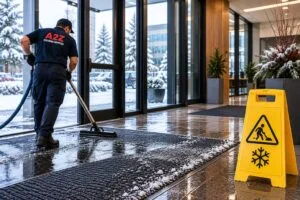
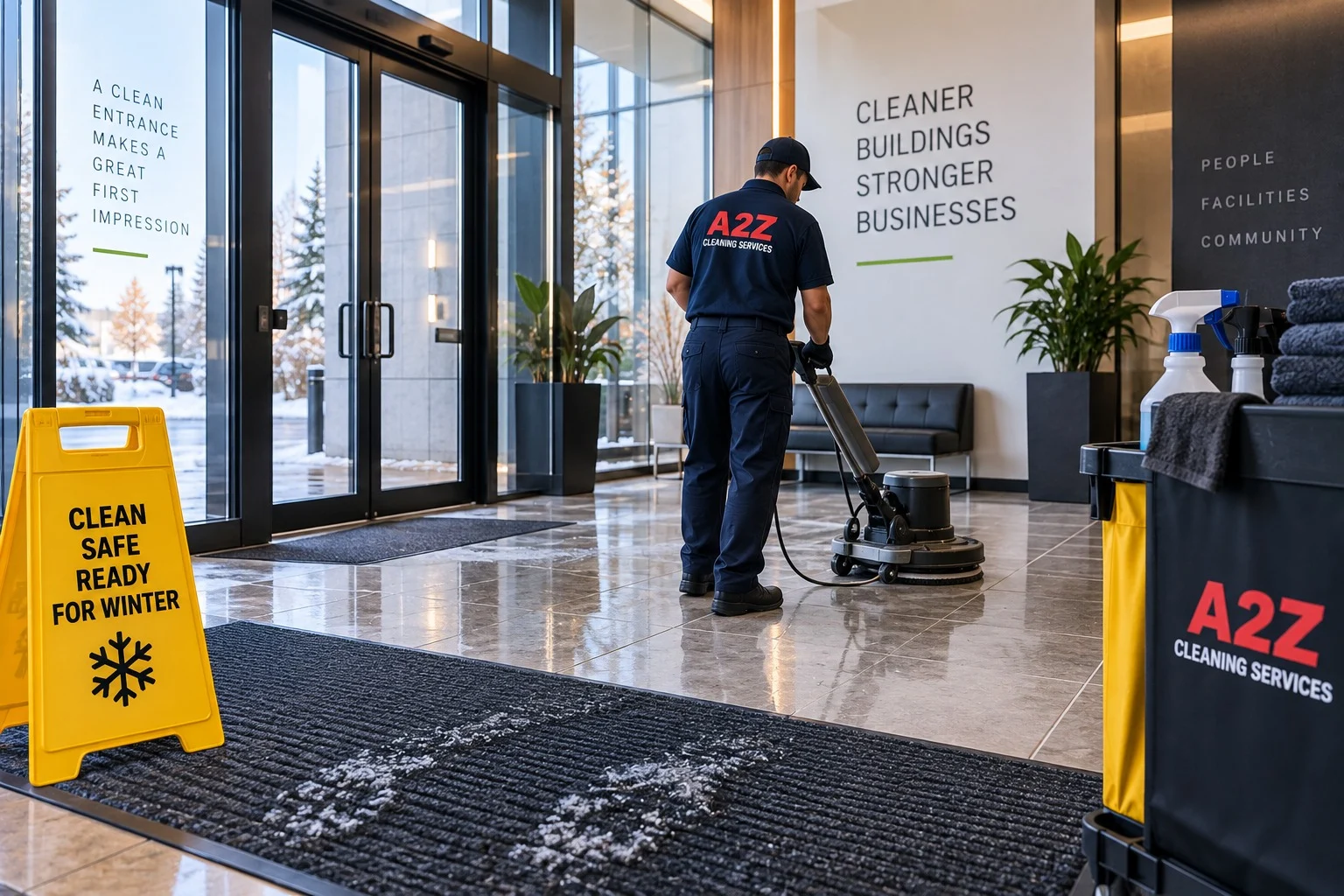
Winter can be hard on commercial floors before the first major snowfall even arrives. Damp shoes, early salt use, mud, leaves, slush, and heavy entrance traffic can quickly turn clean floors into stained, slippery, and difficult-to-maintain surfaces.
For facility managers, property managers, office managers, condo boards, clinic administrators, retail operators, restaurant owners, warehouse teams, and building supervisors, pre-winter floor care Ontario commercial buildings need is not just a seasonal cleaning task. It protects safety, appearance, floor finish, carpet condition, tenant satisfaction, customer confidence, and long-term maintenance costs.
The external problem is easy to see: white salt residue, dull tile, tracked-in moisture, stained carpets, dirty mats, slippery entrance zones, and high-traffic paths that look worn before winter is halfway over.
The internal frustration is just as real. Managers may feel like the cleaning team is constantly chasing the same mess. Staff may complain about wet entrances. Tenants may notice dirty common areas. Customers may walk into a building that feels neglected during one of the toughest seasons of the year.
For facilities that need structured seasonal support, professional commercial cleaning services can help prepare floors, entrances, carpets, tile, and high-traffic areas before winter salt and moisture create bigger problems.
Pre-Winter Floor Care Ontario Facilities Need
Pre-winter floor care Ontario facilities need should begin before snow, salt, and slush become part of the daily routine. Once winter weather arrives, floors often require more frequent cleaning, stronger entrance control, and a clearer plan for protecting surfaces.
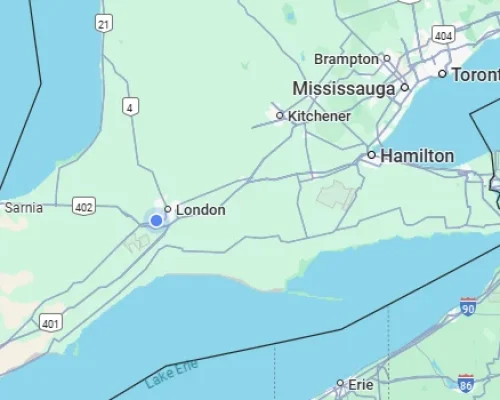
In London, Ontario, winter conditions can change quickly. A mild fall week can be followed by freezing rain, wet snow, salted sidewalks, and muddy parking lots. Commercial buildings near downtown London, Masonville, White Oaks, Hyde Park, Byron, Wellington Road, industrial parks, clinics, schools, and retail plazas can all experience heavy seasonal floor pressure.
The main challenge is that winter floor damage often starts at the entrance and spreads inward. Moisture, salt, grit, and dirt are carried from sidewalks and parking lots into lobbies, corridors, elevators, offices, washrooms, waiting areas, and shared spaces.
A strong pre-winter floor care plan helps stop that spread early. It identifies vulnerable surfaces, prepares entryways, reviews matting, schedules deep cleaning, and adjusts janitorial routines before the building enters peak winter stress.
Why Winter Salt Is So Hard on Commercial Floors
Winter salt helps manage ice outside, but it can create serious cleaning problems inside. Salt residue can leave white marks, dull floor finishes, stain carpets, increase grit underfoot, and make floors look dirty shortly after they were cleaned.
Salt and grit can also act like sandpaper on hard floors. As people walk across tile, vinyl, concrete, stone, or finished surfaces, the abrasive material can contribute to scratches, dullness, and faster wear. On carpets, salt and moisture can settle into fibres and leave visible staining or stiffness.
Moisture is another concern. Wet entrances and walkways can create slip concerns, damage mats, increase odours, and make the building feel poorly maintained. If the cleaning plan does not change for winter, staff may spend the season reacting to mess instead of controlling it.
That is why floor care should be planned before winter begins. Waiting until the floors already look damaged usually means more work, more complaints, and more difficulty restoring a professional appearance.
Pre-Winter Floor Care Checklist
A practical checklist helps facility teams review floor risks before winter arrives. It also helps compare cleaning quotes because each provider can respond to the same areas and priorities.
| Floor Area | Pre-Winter Priority | Why It Matters |
|---|---|---|
| Main entrances | Inspect mats, clean vestibules, detail door tracks, mop edges, and review traffic paths. | Entrances are the first defence against salt, slush, mud, and tracked-in moisture. |
| Lobbies and reception areas | Clean hard floors, polish visible surfaces, remove buildup, and plan increased winter touchups. | These areas shape the first impression for customers, tenants, staff, and visitors. |
| Carpeted areas | Vacuum deeply, spot treat, clean high-traffic lanes, and protect entry-adjacent carpets. | Carpets can hold salt, moisture, odours, dirt, and stains if not prepared early. |
| Tile and grout | Clean grout lines, floor edges, washroom tile, entry tile, and food or service areas. | Grout can trap dirt, salt, moisture, grease, and odours that routine mopping may not remove. |
| Hallways and corridors | Review high-traffic lanes, corners, baseboards, floor edges, and elevator access points. | Traffic paths carry winter residue deeper into the building if entrances are overwhelmed. |
| Washroom floors | Detail floors, grout, drains, partitions, corners, and fixture-area buildup. | Washrooms can develop odours and visible floor issues faster during high indoor traffic. |
| Loading docks and back entrances | Remove dirt, salt, grease, tire marks, and debris from employee and delivery routes. | Back-of-house traffic can track winter grime into warehouses, kitchens, stockrooms, and service areas. |
This checklist should be adapted to your building type. An office, medical clinic, condo building, restaurant, school, gym, hotel, warehouse, retail store, or industrial facility will each face different winter floor pressures.
What Floors Should Be Prepared Before Winter?
Every floor type should be reviewed before winter, but not every surface needs the same approach. Hard floors, carpets, tile, grout, concrete, entrance mats, and finished surfaces all react differently to moisture and salt.
Hard floors often need extra attention because salt residue becomes visible quickly. If the finish is already dull, scratched, or worn, winter traffic can make the floor look worse. Scrubbing, detail cleaning, or floor finish review may be needed before heavy salt season begins.
Carpets near entrances are especially vulnerable. They collect moisture, salt, dirt, leaves, and grit. Without proper vacuuming, spot treatment, matting, and periodic cleaning, carpets can become stained, stiff, or odour-prone.
Tile and grout can be another problem area. Tile may wipe clean on the surface while grout lines hold residue. In washrooms, kitchens, restaurants, clinics, schools, and entrance areas, grout can darken quickly through the winter months.
How Entrance Matting Supports Winter Floor Care
Entrance matting is one of the most important parts of pre-winter floor care. A good matting strategy helps trap dirt and moisture before they spread across the building.
Mats should be large enough for people to take several steps before reaching the main floor. They should also be placed where traffic actually moves, not only where they look neat. In busy buildings, mats may need to be cleaned, changed, or repositioned more often during winter.
Matting should be reviewed at main entrances, staff entrances, delivery doors, loading docks, parking access points, vestibules, elevators, and any area where people enter from outside.
Even the best matting will not solve winter floor problems alone. It must be combined with regular vacuuming, mopping, spot cleaning, entrance checks, floor care, and clear response when wet weather increases traffic.
Why September and October Are the Best Planning Months
September and October are ideal months for pre-winter floor care because there is still time to prepare before salt and slush become daily issues. Waiting until December often means the building is already reacting to stains, residue, moisture, and floor complaints.
Early planning helps facility teams inspect floor condition, review entrance matting, schedule deep cleaning, update janitorial scopes, and prepare for higher-frequency cleaning in winter.
For businesses across London, St. Thomas, Strathroy, Woodstock, Ingersoll, Stratford, Kitchener, Waterloo, Cambridge, and Windsor, this timing is especially useful because fall weather can quickly shift from dry conditions to wet, cold, and messy entrances.
A2Z Cleaning Services becomes the guide here because facility teams should not have to guess how to prepare floors for Ontario winter conditions. As a LIUNA Local 1059 member commercial cleaning and janitorial company with trained bonded staff and a local Southwestern Ontario presence, A2Z understands how seasonal salt, slush, moisture, and traffic affect commercial floors.
A Simple 3-Step Plan for Pre-Winter Floor Care
If your facility is not ready for winter floor pressure, start with a simple plan. The goal is to protect entrances, reduce tracking, and maintain a cleaner building through the hardest months of the year.
1. Walk every entrance and traffic path
Start outside the building and walk in like a customer, tenant, employee, patient, visitor, or delivery driver. Follow the path from sidewalk or parking lot into the entrance, lobby, hallway, elevator, office, washroom, or service area.
Notice worn mats, dull floors, dirty edges, stained carpets, wet areas, dark grout, salt residue, and places where dirt is already being tracked deeper into the building.
2. Separate daily cleaning from seasonal floor care
Daily cleaning handles visible dirt, wet areas, garbage, washrooms, mopping, vacuuming, and routine entrance checks. Seasonal floor care addresses deeper buildup, finish condition, carpet cleaning, grout cleaning, floor scrubbing, and pre-winter preparation.
This distinction is important because routine cleaning alone may not protect floors if the surfaces already need deeper attention before winter starts.
3. Adjust the winter cleaning scope early
Your winter cleaning scope should identify which entrances need extra attention, how often floors are checked, when mats are cleaned or changed, how carpets are protected, and what happens during heavy snow, freezing rain, or high-salt periods.
If your building needs pre-winter floor care before salt and slush arrive, Request your free quote.
How to Compare Pre-Winter Floor Care Quotes
When comparing floor care quotes, do not choose only by the lowest price. Compare the scope, surface types, frequency, staffing, products, equipment, scheduling, supervision, access, and whether the provider understands seasonal Ontario conditions.
Ask each provider what is included for entrances, carpets, hard floors, tile, grout, washrooms, lobbies, corridors, loading areas, and winter salt preparation. Ask whether the work is one-time deep cleaning, recurring janitorial service, or a blended seasonal plan.
You should also ask how the provider handles changing weather. Winter cleaning needs may shift after storms, freezing rain, high-salt days, special events, tenant move-ins, or periods of heavier foot traffic.
If you are preparing for winter salt specifically, this related reading may help: how winter salt damage affects commercial floors in Ontario.
For facilities that need detailed hard floor support, commercial strip and wax services can help restore and protect suitable floor surfaces before heavy seasonal wear.
What Success Looks Like Through Winter
Success looks like a building that stays easier to maintain even during bad weather. Entrances are controlled. Mats are used properly. Floors are checked more often. Carpets are protected. Salt residue is addressed before it spreads. Washrooms and corridors stay cleaner.
Managers spend less time reacting to complaints. Staff feel safer walking through entrance areas. Tenants see a property that feels cared for. Customers and visitors walk into a cleaner, more professional environment.
Failure looks different. Salt stains appear early and stay all season. Mats become soaked. Floors look dull. Carpets hold moisture and odours. Grout darkens. Lobbies look dirty minutes after cleaning. The building feels like it is losing the winter fight every day.
Pre-winter floor care Ontario commercial buildings schedule should be treated as preventive maintenance, not only cleaning. It helps protect appearance, safety, flooring investment, and the experience people have inside your facility.
When the plan is right, your floors are better prepared before winter arrives, and your building is easier to keep clean all season long.
FAQ
When should Ontario businesses start pre-winter floor care?
Ontario businesses should start pre-winter floor care in September or October before salt, slush, and moisture become daily issues. Early planning gives facility teams time to inspect floors, clean carpets, review mats, address grout, protect entrances, and adjust janitorial routines before winter weather increases cleaning pressure.
How does winter salt damage commercial floors?
Winter salt can leave white residue, dull floor finishes, stain carpets, increase grit underfoot, and make high-traffic areas look dirty shortly after cleaning. Salt and grit can also contribute to surface wear when people track them across tile, vinyl, concrete, stone, carpet, or finished floors.
What areas need the most floor care before winter?
The most important areas are main entrances, vestibules, lobbies, corridors, carpeted entry zones, washroom floors, tile and grout, elevators, loading docks, staff entrances, and back doors. These areas receive the most salt, moisture, dirt, and traffic during winter and can spread residue deeper into the building.
How do I compare pre-winter floor care quotes?
Compare quotes by written scope, not only price. Confirm which floor types are included, what entrance areas are covered, whether carpets, tile, grout, mats, lobbies, washrooms, and loading docks are addressed, and how the provider adjusts cleaning during storms, salt-heavy days, and high-traffic winter periods.