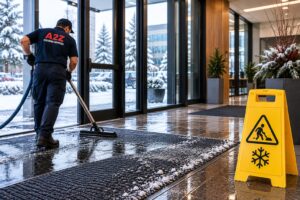
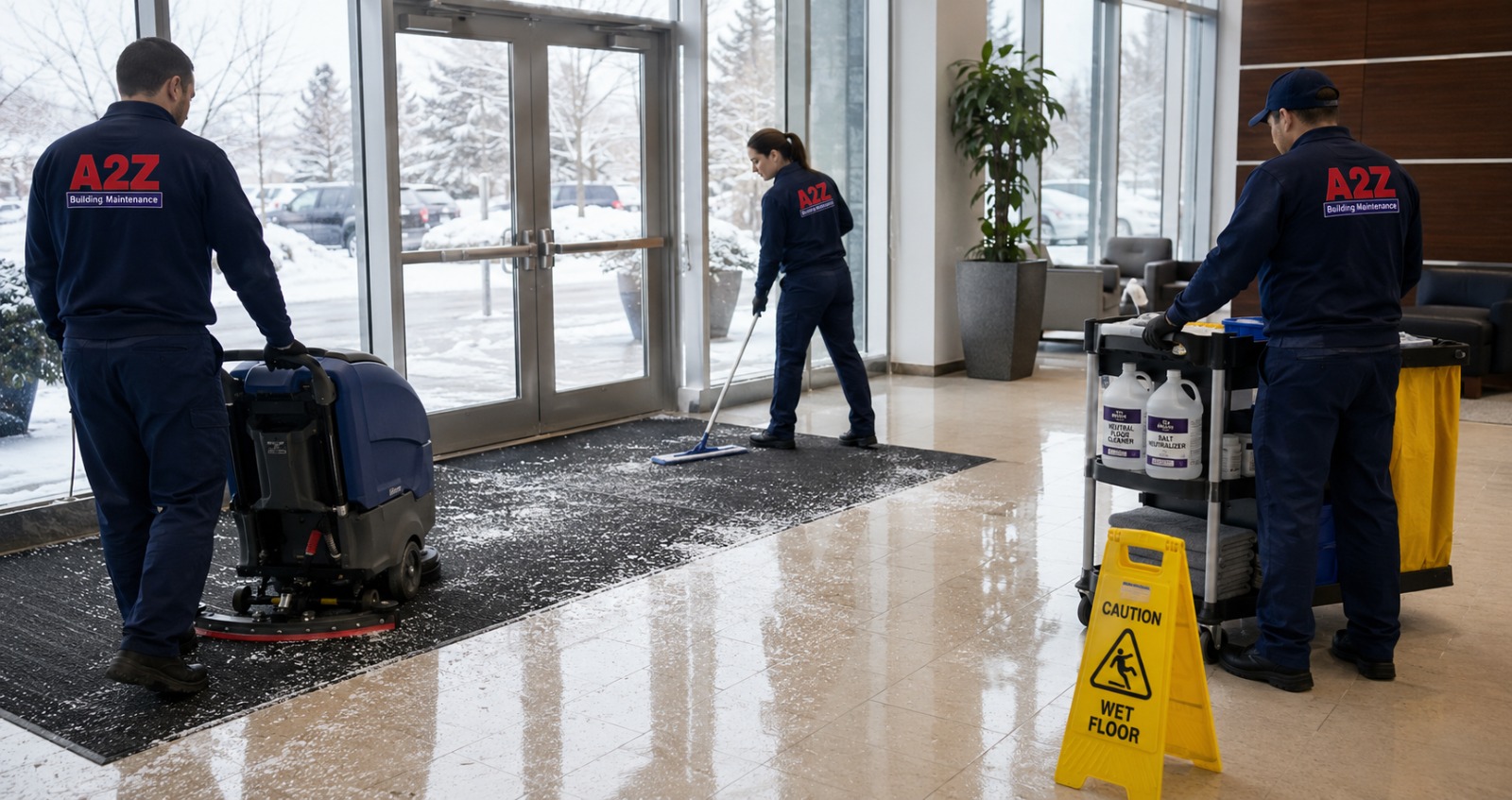
Winter salt damage commercial floors Ontario businesses depend on can start before anyone notices a serious problem. One snowy week of wet boots, slush, sand, and road salt can leave entryways dull, slippery, stained, and harder to maintain.
For facility managers, office managers, condo boards, clinic administrators, restaurant owners, retailers, and industrial property teams, winter floor damage is not just a cleaning issue. It affects safety, first impressions, maintenance costs, staff workload, tenant satisfaction, and the professional image of your building.
The external problem is clear: salt gets tracked across lobbies, corridors, washrooms, elevators, stairwells, staff areas, and customer-facing floors. The internal frustration is just as real. You may feel embarrassed when visitors see white residue, worried about slip complaints, or frustrated that regular mopping does not seem to fix the problem.
The stakes of inaction are costly. Floors can become dull, scratched, slippery, stained, or worn down faster than expected. For facilities that need stronger seasonal protection, professional strip and wax floor care services can help protect commercial floors before Ontario winter damage becomes expensive to correct.
Winter Salt Damage Commercial Floors Ontario: Why It Happens
Winter salt damage commercial floors Ontario facilities experience is caused by a mix of moisture, abrasive grit, chemical residue, foot traffic, and delayed maintenance. Salt does not stay at the entrance. It spreads with every step, wheel, cart, delivery, and staff movement through the building.
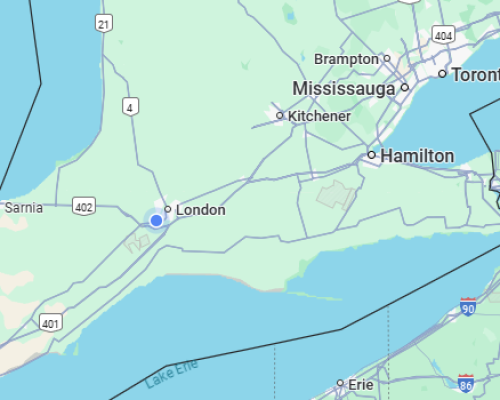
In London, Ontario, winter conditions can change quickly. A building near downtown London, Masonville, Hyde Park, White Oaks, Byron, or an industrial corridor may see snow, rain, freezing temperatures, wet entrances, and heavy salt use within the same week.
That repeated cycle is hard on floors. Salt residue can leave white marks, dull floor finish, create a gritty surface, and make routine cleaning less effective. Abrasive particles can act like sandpaper under shoes, especially in high-traffic entrances, corridors, elevator areas, and reception spaces.
Many businesses do not realize the damage is happening until the floor already looks tired. By then, routine mopping may only move the residue around instead of fully correcting the buildup.
What Areas Are Most at Risk During Ontario Winter?
The highest-risk areas are the places where people enter, stop, turn, wait, or change direction. These zones collect the most slush, salt, sand, and moisture, especially during busy mornings, lunch traffic, shift changes, deliveries, and evening exits.
Common risk areas include front entrances, vestibules, lobbies, reception areas, elevators, stairwells, washroom entrances, staff rooms, hallways, loading dock access points, retail checkout zones, clinic waiting rooms, and condo common areas.
Different facilities experience the problem in different ways. A medical office may notice salt trails from the entrance to the waiting room. A restaurant may see dull tile near the front door. A condo board may receive complaints about lobby floors. A warehouse or industrial facility may see salt, grime, and grit pushed deeper into operational zones.
The problem usually gets worse when there is no clear winter floor care plan. Staff may mop more often, but if the wrong process or product is used, floors can still look cloudy, sticky, or streaked.
How Does Road Salt Damage Commercial Floors?
Road salt damages commercial floors by leaving chemical residue, attracting moisture, increasing abrasion, and breaking down the appearance of protective floor finishes over time. The visible white film is only part of the issue.
Moisture can carry salt deeper into floor edges, grout lines, corners, mats, and transition areas. Grit can scratch protective coatings. Repeated wet-dry cycles can make floors look dull and uneven. In some cases, floors may feel slippery or sticky depending on the surface, product residue, and cleaning method.
Hard floors such as vinyl composite tile, luxury vinyl, ceramic tile, concrete, sealed floors, and finished lobby floors can all be affected in different ways. Carpeted entrances can also hold salt and moisture, creating odour, staining, and faster wear if not maintained properly.
This is why winter salt damage commercial floors Ontario property teams face should be handled proactively. Waiting until March or April may mean your floor has already absorbed months of residue, abrasion, and visual decline.
Winter Floor Protection Checklist for Commercial Facilities
A winter floor protection checklist helps your team prevent damage instead of reacting to it. The best approach combines matting, routine cleaning, proper products, periodic floor care, and clear accountability.
| Protection Step | Why It Matters | When to Review It |
|---|---|---|
| Entrance matting | Captures moisture, salt, grit, and debris before it spreads across the building. | Before the first major snowfall and after heavy storms. |
| Daily entryway cleaning | Prevents salt and slush from being tracked into corridors, lobbies, and work areas. | Daily during winter, especially during wet or snowy weeks. |
| Proper neutralizing products | Helps break down salt residue that standard mopping may leave behind. | During winter floor care planning and product review. |
| Floor finish inspection | Shows whether protective coatings are worn, dull, scratched, or vulnerable. | Before winter and again near the end of the season. |
| Spot cleaning high-traffic zones | Targets the areas that receive the most salt, moisture, and abrasive grit. | During busy traffic periods, storms, and thaw cycles. |
| Scheduled strip and wax planning | Restores protection and appearance when finish has worn down or become damaged. | Before winter, after winter, or during planned facility downtime. |
| Communication with cleaners | Ensures cleaners know which entrances, corridors, and floor zones need extra winter attention. | At the start of winter and after any recurring complaint. |
This checklist should be adapted to your facility. A downtown office tower, medical clinic, retail store, condo building, restaurant, warehouse, and school may all need different matting, cleaning frequency, and floor care timing.
Why Regular Mopping Is Not Always Enough
Regular mopping helps, but it does not always solve winter salt problems. If salt residue is heavy, if mop water is not changed often enough, or if the wrong cleaning product is used, the floor may still dry with streaks, haze, or a sticky feel.
In many facilities, winter cleaning needs a more specific process. Entry areas may need more frequent attention. Mats may need to be cleaned, replaced, or repositioned. Floors may need a product designed to address salt residue. High-traffic zones may need periodic machine scrubbing rather than only manual mopping.
The bigger issue is protection. If the floor finish is already worn down, salt and grit can do more damage. That is where strip and wax planning becomes important for many commercial facilities.
A2Z Cleaning Services becomes the guide here because facility teams should not have to guess which floor care steps are necessary. As a LIUNA Local 1059 member commercial cleaning and janitorial company with trained bonded staff and a local Southwestern Ontario presence, A2Z understands how Ontario winter conditions affect commercial buildings.
We see the same pattern every winter: salt enters at the doors, spreads across the building, creates complaints, and slowly damages floors when there is no clear plan. A structured floor care program helps prevent that cycle.
A Simple 3-Step Plan to Protect Your Floors Before Winter
Protecting your floors does not have to be complicated. Start with a practical plan that identifies risk, sets the right frequency, and schedules deeper floor care before damage becomes harder to reverse.
1. Inspect your highest-traffic floor zones
Walk through your building from the main entrance to the areas people use most. Look at the vestibule, lobby, reception area, hallways, elevator zones, washroom entrances, staff areas, and delivery access points.
Notice where floors look dull, cloudy, scratched, sticky, or stained. These are the areas most likely to suffer during winter salt season.
2. Match cleaning frequency to winter traffic
Winter cleaning frequency should be based on actual traffic and weather, not just a fixed routine. A facility may need extra entry cleaning during storms, thaw cycles, or heavy salt use.
This is especially important for buildings with public access, medical appointments, retail customers, restaurant guests, tenants, delivery drivers, or shift-based staff movement.
3. Schedule preventive or restorative floor care
If the finish is still in good condition, preventive cleaning and maintenance may be enough. If the floor is already dull, scratched, or difficult to clean, strip and wax planning may be the smarter option.
If your facility needs a winter floor protection plan before salt season arrives, Request your free quote.
When Should You Schedule Strip and Wax Floor Care?
Many Ontario facilities schedule floor care before winter to strengthen protection or after winter to restore floors damaged by salt, grit, and moisture. The right timing depends on the condition of the floor, traffic level, budget, and operating schedule.
Before winter, strip and wax can help restore a protective finish and improve the floor’s ability to handle heavy traffic. After winter, it can help correct dullness, salt damage, scratches, and worn appearance caused by months of exposure.
For some facilities, the best plan may involve both preventive maintenance before winter and deeper restoration after the season. For others, a spring refresh may be enough if routine winter cleaning is strong.
Timing also depends on business operations. Offices may schedule work after hours. Clinics may choose weekends or holiday closures. Retail spaces may plan around slow periods. Condo boards may coordinate with residents. Warehouses may schedule work by zones to avoid disrupting operations.
If you are still comparing cleaning providers or deciding how to structure your plan, this related reading may help: floor strip and wax plans for high-traffic facilities.
For facilities that need ongoing support during the season, professional janitorial services can help keep daily winter cleaning consistent while periodic floor care is scheduled around your building’s needs.
What Success Looks Like After a Winter Floor Care Plan
Success looks like a building that stays professional through the hardest months of the year. The entrance feels safer. The lobby looks cleaner. Floors do not show constant white residue. Staff spend less time reacting to complaints. Visitors, tenants, customers, and patients see a facility that feels cared for.
Failure looks different. Salt stains become normal. Floors look dull by mid-winter. Mats overflow with slush. Washroom entrances become slippery. Staff keep mopping the same areas without solving the problem. By spring, the floor may need more expensive restoration than it would have needed with a preventive plan.
Winter salt damage commercial floors Ontario businesses manage should not be treated as unavoidable. Ontario winters are harsh, but the right cleaning frequency, matting strategy, product use, and floor care schedule can reduce damage and protect your building’s image.
When the plan is right, your facility looks cleaner, feels safer, and is easier to maintain from the first snowfall to the spring thaw.
FAQ
How does road salt damage commercial floors?
Road salt damages commercial floors by leaving residue, attracting moisture, and carrying abrasive grit across high-traffic areas. Over time, this can dull floor finish, create white haze, increase scratches, and make floors harder to clean. Entryways, lobbies, corridors, elevators, and washroom entrances are usually most affected.
When should Ontario businesses prepare floors for winter salt?
Ontario businesses should review floor protection before the first major salt season, ideally in late summer or early fall. This gives facility teams time to inspect floors, improve matting, adjust cleaning frequency, choose proper products, and schedule preventive floor care before snow, slush, and road salt become daily problems.
Is strip and wax helpful for winter floor protection?
Yes. Strip and wax can help restore appearance and add a protective finish to suitable commercial floors. It is especially useful when floors look dull, scratched, cloudy, or difficult to clean. Some facilities schedule it before winter for protection, while others schedule it after winter for restoration.
How do I compare winter floor care quotes?
Compare winter floor care quotes by scope, not only price. Ask whether the quote includes floor inspection, salt residue control, matting recommendations, cleaning frequency, product selection, machine scrubbing, strip and wax options, after-hours scheduling, and quality checks. A detailed written plan helps avoid surprise costs and missed tasks.