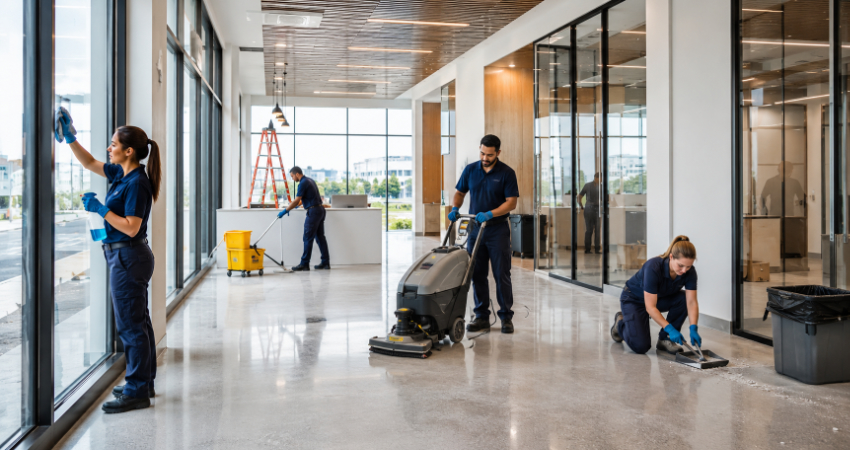
A newly built or renovated commercial property may look close to completion, but construction dust, debris, adhesive residue, paint marks, packaging materials, and hidden surface buildup can still make the space unready for staff, tenants, customers, or inspectors. That is why a clear post-construction cleaning checklist is essential before handover, occupancy, or reopening.
For commercial property managers, builders, facility managers, and operations teams in Ontario, post-construction cleaning is not just the final cosmetic step. It helps turn a construction site into a usable business environment. The right checklist supports safety, presentation, inspection readiness, indoor comfort, and a smoother transition into daily operations.
Post-Construction Cleaning Checklist: Why It Matters
Construction and renovation work leave behind more than visible mess. Fine dust can settle on vents, ledges, floors, glass, fixtures, millwork, baseboards, washrooms, and high-touch surfaces. Debris can remain in corners, utility areas, stairwells, loading zones, and storage rooms. If these details are missed, the building may feel unfinished even when construction work is technically complete.
A practical checklist helps commercial teams confirm that important areas are cleaned before the property is handed over or opened. It also helps reduce last-minute complaints from tenants, employees, visitors, and clients.
For businesses that need professional support, A2Z Building Maintenance provides post-construction cleaning services designed to help commercial spaces move from project completion to operational readiness.
1. Remove Construction Debris and Loose Materials
The first step in any post-construction cleaning plan is removing loose materials that can create safety risks or slow down final preparation. This includes more than large debris. Small items can also affect the final condition of the property.
- Remove leftover packaging, cardboard, plastic wrap, tape, and protective coverings.
- Clear small debris from floors, corners, stairwells, entrances, storage areas, and mechanical-adjacent spaces.
- Check behind doors, under fixtures, and around built-in units.
- Confirm that waste is separated and removed according to site requirements.
- Keep exits, hallways, and service areas clear for safe access.
This step creates the foundation for detailed cleaning. Without it, dusting, floor care, and surface cleaning become less effective.
2. Control Construction Dust on Surfaces
Construction dust is one of the biggest post-project cleaning challenges. It spreads easily, returns quickly if not handled properly, and can make a new property feel unfinished. Dust can also affect vents, fixtures, furniture, equipment, and client-facing areas.
Key dust-control tasks include:
- Dust walls, ledges, baseboards, door frames, window sills, and trim.
- Clean vents, grilles, light fixtures, switches, and accessible high surfaces.
- Wipe counters, cabinets, built-ins, reception areas, and interior glass.
- Use proper methods to avoid simply moving dust from one surface to another.
- Recheck surfaces after floor cleaning, because dust may resettle.
In larger commercial properties, construction dust removal may require phased cleaning so the space can be cleaned, inspected, and touched up before occupancy.
3. Clean Floors, Edges, and High-Traffic Paths
Commercial floors often take heavy abuse during construction. Even when protected, they may collect dust, adhesive marks, footprints, scuffs, paint spots, or construction residue. Floors should be inspected carefully because they strongly influence the first impression of the completed space.
- Sweep and vacuum floors before mopping or machine cleaning.
- Remove dust from floor edges, corners, and under fixed features.
- Check for paint drops, adhesive residue, tape marks, and scuffs.
- Clean entrance areas where dust and debris are tracked from outside.
- Review whether floors need additional care before opening.
Where the facility also needs periodic detailed cleaning after occupancy, scheduled deep cleaning services can help maintain floors, edges, washrooms, and high-use areas beyond the initial post-construction stage.
4. Detail Washrooms, Kitchens, and Staff Areas
Washrooms, kitchens, and staff areas require close attention because they are used immediately after handover. These areas often include new fixtures, counters, partitions, mirrors, appliances, tile, grout, and high-touch surfaces that may still hold dust or installation residue.
- Clean sinks, counters, mirrors, partitions, dispensers, and fixtures.
- Remove dust from tile edges, grout lines, corners, and baseboards.
- Wipe inside cabinets, drawers, and storage units where applicable.
- Clean appliance exteriors and accessible interior surfaces.
- Confirm that washrooms are stocked and ready for use.
These spaces should not only look clean from the doorway. They should be ready for daily use by staff, tenants, customers, or visitors.
5. Inspect Glass, Windows, Doors, and Interior Details
Glass and interior finishes show construction residue quickly. Fingerprints, dust, labels, tape marks, silicone residue, and paint specks can affect the finished look of a commercial space.
- Clean interior glass, entrance doors, partitions, and mirrors.
- Remove labels, tape residue, fingerprints, and smudges where appropriate.
- Wipe door handles, frames, push plates, and high-touch entry points.
- Check reception areas, meeting rooms, corridors, and client-facing spaces.
- Review details under natural and artificial lighting when possible.
For broader commercial property preparation, post-construction cleaning can be coordinated with ongoing commercial cleaning services so the building remains consistent after the initial handover.
6. Check Entrances, Exterior-Adjacent Areas, and Loading Zones
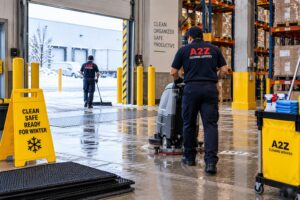
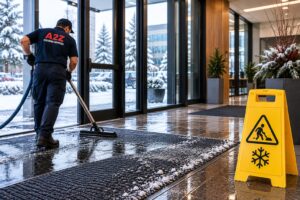
Commercial properties often continue collecting dirt near entrances, loading zones, sidewalks, and exterior-adjacent areas during the final stages of construction. These areas can bring dust, mud, salt, and debris back into the building if they are not addressed.
- Clean entry mats, thresholds, vestibules, and lobby edges.
- Remove dust and debris near service doors and loading areas.
- Inspect sidewalks, dock areas, and exterior-adjacent surfaces.
- Clean tracked-in dirt near entrances after final contractor activity.
- Use stronger cleaning methods when exterior grime has built up.
When loading docks, exterior walkways, or entry areas need heavier cleaning, pressure washing services may help remove grime and improve the transition between outdoor and indoor areas.
Warning Signs the Property Is Not Ready for Handover
A commercial property may appear complete, but several signs suggest it needs more cleaning before occupancy or client presentation.
- Dust appears again shortly after surfaces are wiped.
- Floors feel gritty, sticky, dull, or marked.
- Glass still shows labels, smudges, or adhesive residue.
- Washrooms have dust around fixtures, grout, partitions, or corners.
- Debris remains in stairwells, storage rooms, service areas, or mechanical-adjacent zones.
- Entrances continue tracking dust into finished areas.
If these signs are present, the property may need a second-pass clean, detail cleaning, or professional support before final presentation.
Common Post-Construction Cleaning Mistakes to Avoid
One mistake is treating post-construction cleaning like standard routine cleaning. Construction cleanup requires more detail, more inspection, and often more than one pass. Dust can resettle after the first cleaning, especially in larger buildings or spaces where contractors are still completing final work.
Another mistake is cleaning too early. If cleaning begins before trades are finished, the same areas may need to be cleaned again. A better approach is to schedule cleaning around project milestones: rough cleaning, final cleaning, and touch-up cleaning before occupancy.
Commercial teams should also avoid overlooking non-public areas. Storage rooms, staff corridors, service doors, back-of-house spaces, stairwells, and loading areas all affect how the property functions after handover.
When Professional Post-Construction Cleaning Support Makes Sense
In-house staff may be able to handle light tidying, but post-construction cleaning often requires trained cleaners, proper equipment, dust-control methods, detail work, and flexible scheduling. Professional support is especially useful when the property is large, time-sensitive, client-facing, or preparing for inspection, tenant move-in, or reopening.
For commercial properties in London, Ontario and nearby service areas, A2Z Building Maintenance can help prepare spaces after construction or renovation with a cleaning plan that supports safer, cleaner, and more professional results.
Property managers and builders may also find this related guide on post-construction cleaning checklists for builders helpful when planning cleaning stages around project completion.
Conclusion: Turn Project Completion into Property Readiness
A post-construction cleaning checklist helps commercial properties move from construction completion to real operational readiness. It gives managers a practical way to review debris, dust, floors, washrooms, glass, entrances, and final presentation before the space is handed over or opened.
If your commercial property needs detailed cleaning after construction, renovation, or tenant improvements, A2Z Building Maintenance can help prepare the space for staff, tenants, customers, and inspections with a professional cleaning plan built around your timeline.
FREE QUOTE
Frequently Asked Questions
What is included in post-construction cleaning for commercial properties?
Post-construction cleaning usually includes debris removal, dust control, floor cleaning, washroom detailing, glass cleaning, surface wiping, entrance cleaning, and final touch-up work before handover or occupancy.
When should post-construction cleaning be scheduled?
It is best scheduled after major trades are finished and before final handover, tenant move-in, inspection, or reopening. Larger projects may need rough cleaning, final cleaning, and a touch-up clean.
Why does construction dust keep returning after cleaning?
Fine construction dust can settle from vents, ledges, high surfaces, and unfinished areas after the first cleaning pass. Many commercial properties need a second-pass clean or detailed dust-control process before occupancy.
Do commercial renovations need professional post-construction cleaning?
Yes, professional cleaning is often recommended after commercial renovations because dust, debris, adhesive residue, floor marks, and fixture buildup require more detailed cleaning than standard janitorial service.